


- Abuse & The Abuser
- Achievement
- Activity, Fitness & Sport
- Aging & Maturity
- Altruism & Kindness
- Atrocities, Racism & Inequality
- Challenges & Pitfalls
- Choices & Decisions
- Communication Skills
- Crime & Punishment
- Dangerous Situations
- Dealing with Addictions
- Debatable Issues & Moral Questions
- Determination & Achievement
- Diet & Nutrition
- Employment & Career
- Ethical dilemmas
- Experience & Adventure
- Faith, Something to Believe in
- Fears & Phobias
- Friends & Acquaintances
- Habits. Good & Bad
- Honour & Respect
- Human Nature
- Image & Uniqueness
- Immediate Family Relations
- Influence & Negotiation
- Interdependence & Independence
- Life's Big Questions
- Love, Dating & Marriage
- Manners & Etiquette
- Money & Finances
- Moods & Emotions
- Other Beneficial Approaches
- Other Relationships
- Overall health
- Passions & Strengths
- Peace & Forgiveness
- Personal Change
- Personal Development
- Politics & Governance
- Positive & Negative Attitudes
- Rights & Freedom
- Self Harm & Self Sabotage
- Sexual Preferences
- Sexual Relations
- Sins
- Thanks & Gratitude
- The Legacy We Leave
- The Search for Happiness
- Time. Past, present & Future
- Today's World, Projecting Tomorrow
- Truth & Character
- Unattractive Qualities
- Wisdom & Knowledge






FOLLOWERS
0
Users
Mastery Mondays
Dietary Habits In The Last 100 Years
Eating habits in the last century have changed an awful lot!
If I think about what my grandparents used to eat when they were growing up, versus what my children eat now, it is vastly different.
100 years ago, there wasn’t really such a thing as processed junk food like there is today. Food was made in the home using foods in their natural forms.
A lot of people grew their vegetables in their own gardens and bought meat from their local butchers. They canned and preserved their own foods to last through the winter.
Foods were not regularly shipped in from all over the world at the local grocery store like they are today.
Today, many people never cook at meal at home that isn’t heavily processed. Sure, they might make a box of Kraft Dinner, or heat up a microwavable meal - but the skill of cooking has been lost for many people.
We eat pre-packaged snacks rather than fruits and vegetables and sweets/sugar are part of almost everything we eat.
I would say that we live in a world of convenience in relation to our foods, but we also live in a world where so many of our foods are harmful to our bodies because of chemicals, additives, and harmful processing.
I’m curious to see what happens in the next hundred years - will we go back to eating real foods, or will the heavily processed foods continue to overwhelm us?
Interesting Fact #1
There’s an obvious difference between the food habits of early man and today’s generation, but how has the concept of food changed over the past 100 years? It seems like an age ago, but as you read you might discover surprising similarities to current dietary customs. Back then our food choices relied on instincts and cravings – there was no such thing as tracking daily calorie intake, carbs or fat consumption.
Interesting Fact #2
The lack of factory-farmed animal products in the beginning of the 20th century meant people were eating the healthiest animal product available. Those in rural areas usually raised their own livestock, but urban zones had local butchers where meat was fresh and hand-picked by butchers themselves. Growth hormones, antibiotics, and genetically modified feed was never given to animals; meat quality was higher than today.
Interesting Fact #3
Following the First World War, food habits began to change as dishes like clam broth or potatoes gratin became popular in American society. Things took a different turn in the ’30s when the Great Depression caused mass unemployment, forcing people to become more resourceful by growing vegetables or eating canned foods. Common foods that were consumed included dandelion greens, gophers, wild berries, and squirrels. This is also when the infamous mac‘n’cheese, Ritz crackers, and Spam canned meat all appeared.
Quote of the day
“If you don’t love it, don’t eat it, and if you love it, savor it.” ― Evelyn Tribole
Article of the day - Too much of a food thing: A century of change in how we eat
Think about the last meal you ate. Whether it was a reheated plate of takeout food, a cornucopia of fresh fruit or something in between, it probably would have been unfathomable to most people a century ago.
Over the past 100 years, the way Americans buy, cook and think of food has changed dramatically, driven by developments in how it is manufactured, marketed, purchased and eaten.
Food historians say it's been an era of abundance. And that has had consequences.
"The increasing industrialization of the food supply has not been good for health," said Dr. Marion Nestle, professor emerita of nutrition, food studies and public health at New York University.
A detailed accounting of everything that reshaped Americans' health and diet over the past century could fill a library. But Nestle, a molecular biologist and award-winning author who has written a small library's worth of books on food-related topics, sums it up this way: "People used to eat at home and cook at home. Now, they eat out or eat foods that have already been prepared."
Prepared or even processed food isn't necessarily unhealthy – think of pasteurized milk or sliced carrots. But many highly processed foods contain unhealthy amounts of salt, fat and calories, and research has associated increased consumption of ultra-processed foods with a higher risk of heart conditions and numerous other health problems. A 2021 American Heart Association scientific statement recommends that people choose minimally processed foods instead of ultra-processed ones.
Nestle's simplified definition of ultra-processed food is "food that can't be made at home" because of the processes and additives involved.
Such foods were virtually unknown a century ago. But in 1924, the process that enabled the frozen food industry was invented. And while frozen fruits and vegetables can be a boon to health, frozen food was not the only change that would begin to reshape the U.S. diet, said Dr. Ken Albala, a food historian at the University of the Pacific in Stockton, California.
Albala, author of 27 books on food and editor of many more, said that in the 1920s, most of what people ate would have been fresh, unprocessed and locally grown. But change was coming. A few years earlier, in 1916, the first modern supermarket had opened in Memphis, Tennessee.
Before supermarkets, Albala said, shoppers would have had a personal connection with the grocer at a local market, who would have fetched the items customers asked for based on what the grocer had chosen to stock. The supermarket let people select their own items, which put a premium on branding as manufacturers sought to make their products stand out.
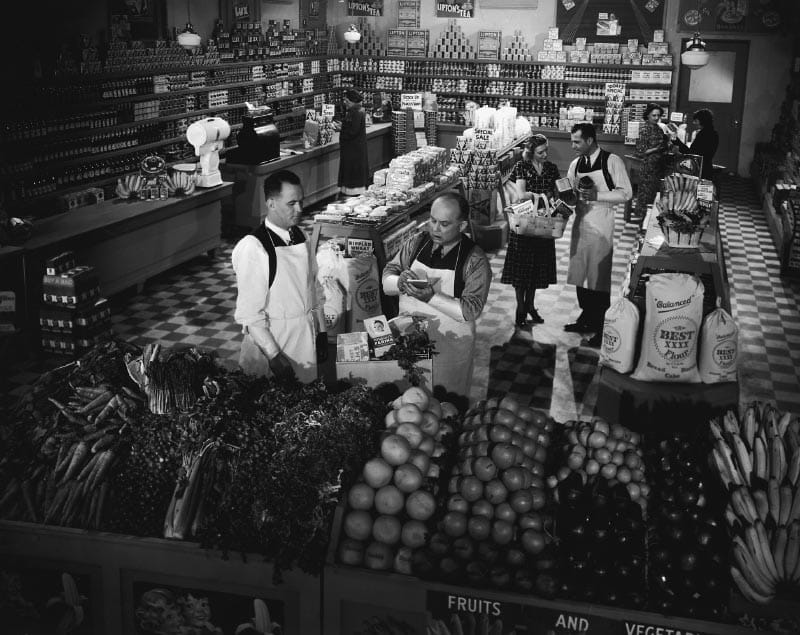
(FPG/Retrofile RF via Getty Images)
That led to "incredible diversity, because now there's 18 different kinds of ketchup and there's 20 brands of frozen this or that," Albala said.
But supermarkets also began distancing people from the source of what they were eating, he said. Before that era, a family might have gotten produce from a stand, which would have sold local harvests in season. The new system favored mass-grown varieties that were bred for color, durability or other factors.
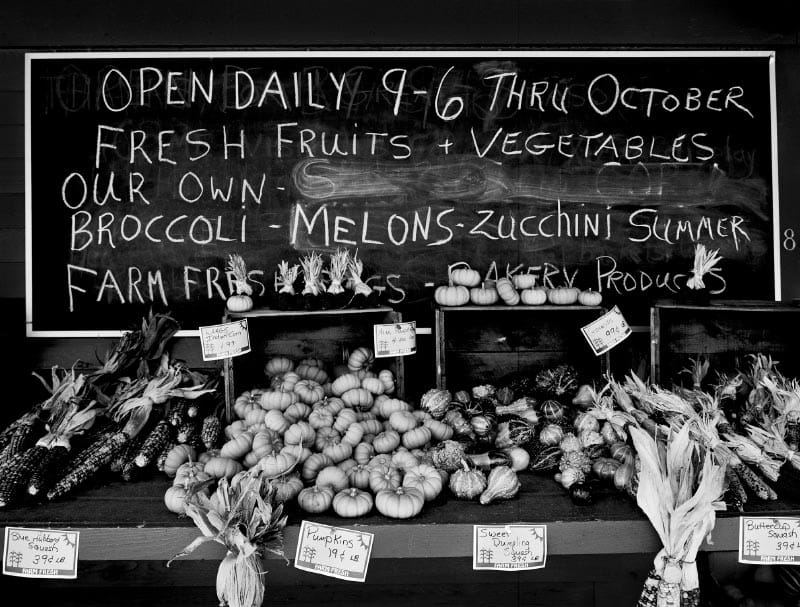
(Jack Milton/500px via Getty Images)
The way food was made changed, too. Factory-made sliced bread surpassed home bakers in the 1930s, a decade that also saw the arrival of processed legends such as boxed macaroni with powdered cheese (with sodium phosphate as an emulsifier) and canned pork shoulder (with salt, sugar and sodium nitrate as a preservative).
But it was World War II that brought radical changes as products and technologies developed to feed soldiers, such as canned meals, made their way into homes.
"You could say the C ration is the grandfather of the TV dinner," Albala said, referring to the frozen, oven-ready meals that became popular in the early 1950s.
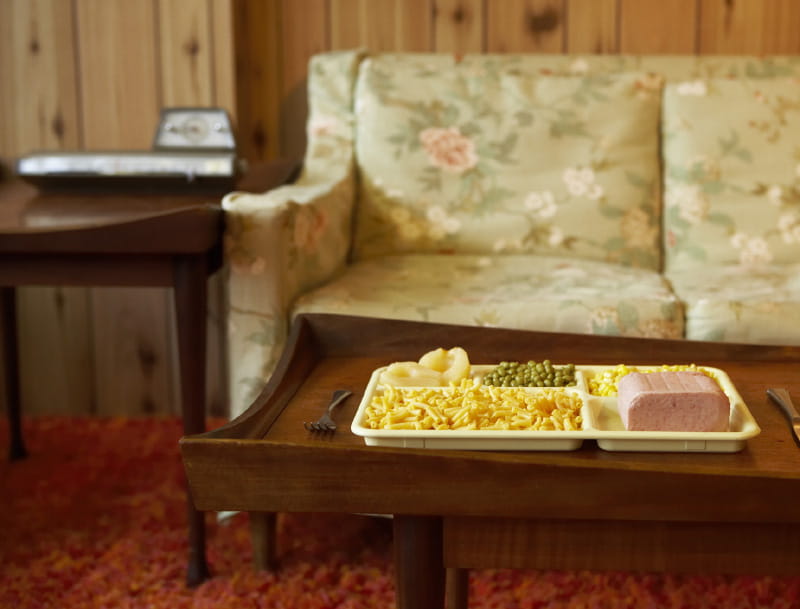
(Noel Hendrickson/DigitalVision via Getty Images)
Nestle said that after the war, processed products started appearing in packages that resembled the original foods that they came from less and less, with an "enormous" emphasis on convenience.
"There was a real concerted effort to make cooking look like drudgery and to take away the idea that cooking was something that was fun and pleasant that you wanted to spend time on," she said.
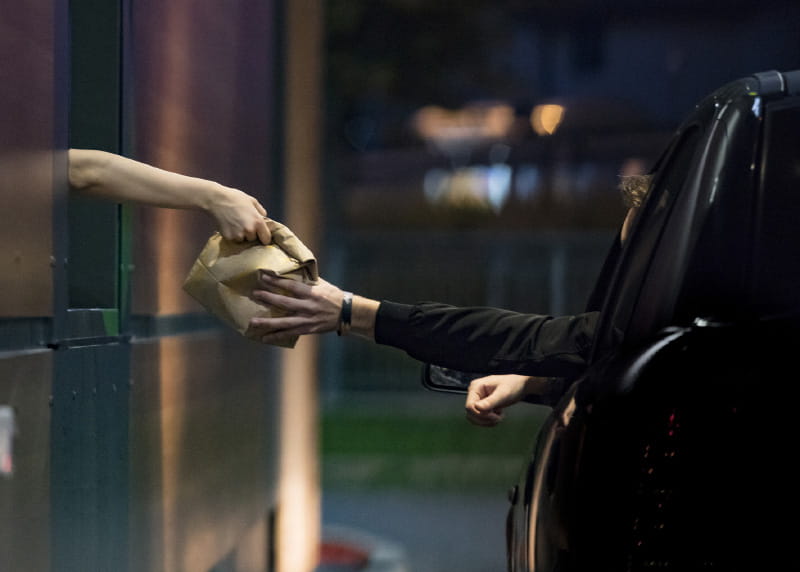
Attitudes about eating out changed. In the 19th century, usually only the wealthiest families would have eaten for pleasure at restaurants. Chain restaurants started popping up in the 1920s, and the 1950s brought widespread fast food – meals that emphasized speed far above nutrition. Spending on meals eaten away from home eclipsed at-home eating in 2010, according to the U.S. Department of Agriculture.
All that convenience may seem like a blessing for the people, traditionally women, who had to prepare and serve all those meals. A homemaker could have spent several hours a day cooking in the 1920s. As of 2022, according to the U.S. Bureau of Labor Statistics, the average American spent an estimated 39 minutes a day on food preparation and cleanup.
Technology and transportation improvements mean someone in Kansas can pick up pineapples from the tropics and farmed salmon from the Atlantic on the same mid-winter grocery trip. And it wouldn't eat up as much of their money as food did a century ago: In 2022, families spent about 11% of their disposable income on food, federal data shows. In 1919, they spent more than three times that percentage, according to historical data.
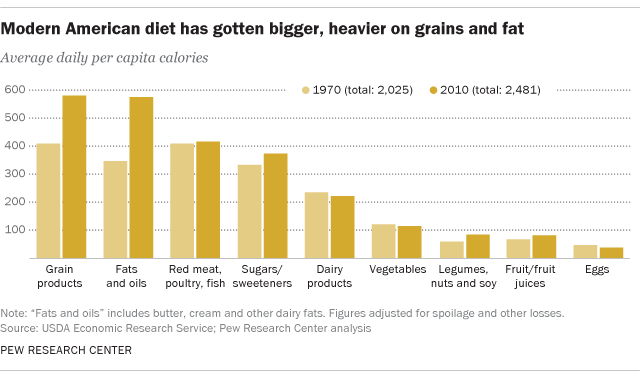
And food is more abundant than ever. One analysis, published in Frontiers in Nutrition in 2022, estimated that available calories grew 18% from 1909 through the following century.
That's the good news. The bad news is that Americans are eating those calories. Albala said the past century is the first time "when a sizable percentage of the population can actually overeat. That's never been the case in history before."
It shows in our waistlines: More than 70% of U.S. adults are overweight, according to the Centers for Disease Control and Prevention. And while eating habits that emphasize foods like fresh fruits and vegetables, whole grains and plant-based protein or lean, unprocessed meats are recommended for heart health, research suggests that more than half of what Americans eat on average is ultra-processed.
(kmatija/E+ via Getty Images)
Nestle said the abundance of food in the U.S. means corporations have to work harder than ever to sell it. So their efforts are frequently focused on making their products "irresistibly delicious" and in larger portions. She said that economics dictate that manufacturers emphasize not wellness, but profits. "Food companies are not social service or public health agencies."
For people trying to stay healthy, fighting all that history can be an uphill battle. "I don't have a crystal ball," Nestle said. "But I see the trends going in the same direction unless there's a big change."
Understanding how we got here can help. But that requires education, Nestle said. And that favors wealthier people, who can afford healthier dining options. People without a lot of money "eat what they can get," she said, and in low-income areas, healthier food often is not easily accessible.
For people interested in bucking historical trends, Albala suggests a thoughtful approach. "Get as much pleasure as you can out of preparing it and cooking and serving it and sharing it and eating it. And that way, I think you will necessarily be more balanced."
While raising his children, Albala emphasized home-cooked meals that were eaten as a family. That's hard sometimes, he said. But "there's a value in sharing and preparing foods. It's much more than just feeding."
But even shopping for basic foods can be a reminder of how much things have changed, he said. A modern shopper picking up an apple might wonder who developed it and whether it was shipped from halfway across the country or from some other country.
"Those are questions that would have perplexed our ancestors a century ago," Albala said.
Question of the day - What do you think is the most harmful result of eating heavily processed junk foods?
Time. Past, present & Future
What do you think is the most harmful result of eating heavily processed junk foods?
Daily archives
Current Survey
Top 5 Contributors (Jun)

20209 pts

12060 pts

10714 pts

10417 pts

10117 pts