


- Abuse & The Abuser
- Achievement
- Activity, Fitness & Sport
- Aging & Maturity
- Altruism & Kindness
- Atrocities, Racism & Inequality
- Challenges & Pitfalls
- Choices & Decisions
- Communication Skills
- Crime & Punishment
- Dangerous Situations
- Dealing with Addictions
- Debatable Issues & Moral Questions
- Determination & Achievement
- Diet & Nutrition
- Employment & Career
- Ethical dilemmas
- Experience & Adventure
- Faith, Something to Believe in
- Fears & Phobias
- Friends & Acquaintances
- Habits. Good & Bad
- Honour & Respect
- Human Nature
- Image & Uniqueness
- Immediate Family Relations
- Influence & Negotiation
- Interdependence & Independence
- Life's Big Questions
- Love, Dating & Marriage
- Manners & Etiquette
- Money & Finances
- Moods & Emotions
- Other Beneficial Approaches
- Other Relationships
- Overall health
- Passions & Strengths
- Peace & Forgiveness
- Personal Change
- Personal Development
- Politics & Governance
- Positive & Negative Attitudes
- Rights & Freedom
- Self Harm & Self Sabotage
- Sexual Preferences
- Sexual Relations
- Sins
- Thanks & Gratitude
- The Legacy We Leave
- The Search for Happiness
- Time. Past, present & Future
- Today's World, Projecting Tomorrow
- Truth & Character
- Unattractive Qualities
- Wisdom & Knowledge






FOLLOWERS
0
Users
Outlooks & Setbacks Saturdays
Overcoming Self Sabotage
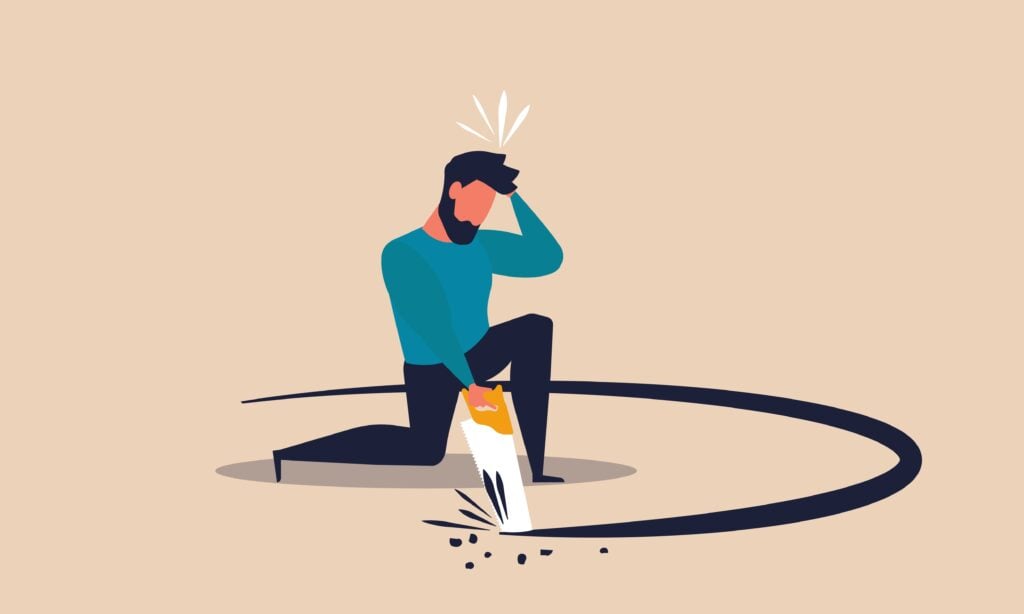
Trying to devote some energy to personal growth? Self-sabotage might be something that is holding you back.
It can manifest in subtle ways that you would not chalk up to self sabotage - ways like procrastination, negative self-talk, perfectionism, or avoiding opportunities because of fear of failure.
Sometimes it feels like there are external forces holding us back, often it’s the internal battle of self-sabotage that actually keeps us from the success we are looking for. Self-sabotage is often based off of limiting beliefs and insecurities. The good news is that self-sabotage is a habit that we can break with some hard work and self-awareness.
Here are a few tips for how to start overcoming self-sabotage:
-
Recognize the patterns that you find yourself in. Self-sabotage often stems from a fear of vulnerability. This causes us to want to stay in our comfort zones. For example, you might delay starting a project because you fear you won’t be able to do it perfectly. Perhaps you avoid a promotion because you doubt your abilities. Start by identifying moments when you’ve held yourself back. You might find journaling helpful at this stage - write down the times you felt stuck and then write down your thoughts and feelings around these times. Like with most things in life, awareness is the first step.
-
Your next step is to challenge your thinking. I sometimes like to call it my “stinkin’ thinkin’” - it’s those thoughts of self doubt that tell us we are not good enough and won’t be able to do it. So the next time you catch yourself in a stinkin’ thinkin’ moment, demand evidence from yourself for the thought. If you think to yourself “I’ll never succeed” ask yourself about all the things that you have actually succeeded in! Then begin to replace your stinkin’ thinkin’ with affirmations that rewire your mindset.
-
Finally take action and don’t expect perfection! Imperfect action will get you a lot further than perfect inaction. We do not need to be perfect to succeed - we just need consistent action in the direction of our dreams. Perfectionism is a common form of self-sabotage that often keeps us from ever trying…or we quit at the first sign of challenge because we are so afraid of failure. Instead, begin to create small, manageable steps towards your goal and celebrate each accomplishment no matter how small. When you mess it all up, learn to view it as a learning opportunity. Be patient with yourself and keep on keeping on.
Overcoming self sabotage is not a fast process - it’s a journey of learning to embrace you who are and have confidence in your ability to persevere. When you confront your fears and build resilience, you can break the cycle of self-sabotage and achieve the goals that you desire.
Interesting Fact #1
Documenting and analyzing behavior is a key component of preventing self-sabotage. People prone to self-defeating behaviors can notice when they feel stressed, and write down both the source of that stress and how they responded. They can explore whether that choice encompasses any mistaken or harmful beliefs, and then train themselves to respond in a new, healthy way, such as by sharing feelings with others, exercising, or developing a new hobby.
Interesting Fact #2
Common types of self-sabotage involve procrastination, perfectionism, relationships, work, finances, time, and change.
Interesting Fact #3
It can be difficult to identify self-sabotaging behavior, especially because the consequences might not immediately follow the behavior, making the connection unclear. One approach is to examine whether your behaviors are aligned with your long-term goals. If not, the behavior may be self-defeating.
Quote of the day
“What is required for many of us, paradoxical though it may sound, is the courage to tolerate happiness without self-sabotage.” ― Nathaniel Branden
Article of the day - Self-Sabotaging: Why Does It Happen
Self-sabotaging behavior refers to intentional action (or inaction) that undermines people's progress and prevents them from accomplishing their goals. Self-sabotage occurs when people hinder their own success.
While it seems surprising, some people undermine their own good intentions and long-term goals. When people take these destructive steps, their harmful behavior can negatively impact nearly every part of their lives including their relationships and career.
This article discusses why people engage in self-sabotaging behaviors and provides some examples of self-sabotage. It also explores steps you can take to stop undermining your own success.
What Causes Self-Sabotaging Behavior?
People thwart their progress for a variety of reasons. They may consciously or unconsciously commit acts of self-sabotage. The causes range from childhood issues to prior relationship effects. Other reasons for this type of destructive behavior vary from low self-esteem and coping problems to problems with cognitive dissonance, which will be explained below.
Self-sabotage often serves as a coping mechanism that people use to deal with stressful situations and past traumas. Unfortunately, it typically makes problems worse and limits a person's ability to successfully move forward in a healthy way.
Conscious and Unconscious Self-Sabotaging
People who self-sabotage might be aware of their actions. For example, someone who's overweight and on a diet might consciously sabotage their good efforts by eating a whole carton of ice cream.
Or they might unconsciously act. A person misses a work deadline. On the surface, it seems like he was running late. But the truth is he’s afraid of failure. He self-sabotages by missing the due date, thus he thwarts his goal to move up in the company.
Difficult Childhood
Growing up in a dysfunctional family can contribute to your acts of self-sabotage. Without a secure attachment style, you might have an ambivalent or avoidant attachment style. Our earliest engagement with caregivers affects how we connect to others.
If your parents told you growing up that you’ll never amount to much, maybe you handicap yourself so that you do fall short.
Difficulty in Relationships
If your ex constantly put you down, you might still feel vulnerable. Maybe they said they were wasting time trying to move forward with someone like you.
Now you’re in a great relationship, but you cheat on your partner. Or break up for no reason. You don’t feel good enough or you fear getting hurt again.
Based on one study on self-sabotage, 15 psychologists specializing in romantic relationships in Australia identified the main issues for the prevalence of self-sabotage in romantic relationships.1
Reasons included:
- Insecure attachment styles
- Low self-esteem
- Fear of getting hurt
- Fear of commitment
- Unhealthy relationship beliefs
- Coping problems when it comes to matters of the heart
The 9 Best Online Couples Therapy Services We Tried and Tested
Low Self-Esteem
People with a negative self-image and low self-esteem are especially vulnerable to self-sabotaging. They behave in ways that confirm negative beliefs about themselves. So, if they are close to succeeding, they become uncomfortable.
They’ve been told all their lives that they’ll fail. Or sometimes they told themselves all their lives that they’d fail. Self-sabotaging behavior help ensure that this becomes a self-fulfilling prophecy.
Cognitive Dissonance
People showing this behavior struggle with cognitive dissonance, or the mental discomfort you may have holding two conflicting ideas at the same time. Human beings like to have consistency between their beliefs and actions.
For example, you are marrying someone great, but you come from a dysfunctional family. Your dad left, and your mother went from one abusive relationship to another. You, therefore, don’t believe in a stable, loving marriage. Yet, you are continuing to plan the wedding and send invitations.
Here’s a work-related example: You are about to land a great client and earn more money than ever before. Rather than do what it takes to propel yourself forward, you hold back because you don’t feel worthy.
So, you get drunk the night before the client meeting and miss it entirely. Rather than move ahead, you take actions to screw things up for yourself.
Self-sabotaging can lead to chronic struggles with food, liquor, drugs, gambling, and self-injury. This destructive behavior can also strip people of their motivation and make them anxious.
Self-Sabotaging: Why Does It Happen
Examples of Self-Sabotaging Behavior
Mental health practitioners have identified common examples of the ways people self-sabotage. Three easy-to-identify examples include procrastination, perfectionism, and self-medication.
Procrastination
People who self-sabotage often procrastinate. Procrastination is a way you show others you’re never ready and put off a good outcome. It’s because people fear disappointing others, failing, or succeeding.
Perfectionism
Holding oneself to an impossible standard will cause delays and setbacks. While it seems like a positive strategy to aim for things to go as planned without a hitch, perfectionism hampers success.
When something does go wrong, as it inevitably will, perfectionists come undone. They end up feeling ashamed. Prone to depression, they feel like they are letting everyone down.
Self-Medication
To deal with the constant battle between wanting to be successful and the script that plays in their brains saying they can’t be, many soothe themselves through drugs, alcohol, and self-injury.
How to Stop Self-Sabotaging
If you're working with a therapist or counselor, your best advice is to look to them for guidance. If you want some pointers on how to cease this negative behavior, here are some things you should consider to prevent you from causing more harm.
Examine the Root Causes
Look for patterns in your life. Have you been prone to thwart your good efforts repeatedly? Did these acts occur before you were about to succeed or when you were close to achieving your personal desires?
As mentioned, this behavior may stem from childhood. Some parents, either knowing no better or afraid that their children will be disappointed, tell their kids not to think big. Maybe they said, “Who are you to believe you can go to college? You need to work like the rest of us.”
Stop Procrastinating
Common behavior exhibited by those who self-sabotage is procrastination. If you keep putting something off what’s important to you, it might be easier emotionally than reaching a goal that you were told you’d never reach.
The mismatch between where you’re at and what was drilled into your head for years might cause you incredible discomfort. So, you self-sabotage.
One study was conducted on student procrastination in academic environments.2 Scientists found one common factor in procrastination involved a lack of self-regulation. This is due to students having a large degree of freedom, temptations, and distractions, and long deadlines.
Peer influence or social factors also influenced procrastination. Finally, a lack of skills in the area of study skills also contributed to procrastination.
Stop Looking Solely at the Big Picture
When you shoot for something big, like becoming a top salesperson where you work, a giant goal can feel overwhelming.
To prevent acts of self-sabotage, don’t get hung up on minutiae. Those who self-sabotage sometimes waste lots of time on unimportant details.
Another example: If you’re trying to get healthy, don’t make all-or-nothing decisions. Don't throw in the towel if you miss the gym one week. Start back the next.
Make small incremental changes and act on them slowly. This way, you might prevent your sabotaging mind from putting on the brakes. Take more bite-sized actions that won’t derail you.
Stop Perfectionistic Thinking
Self-sabotaging people are often perfectionists. Maybe you overthink every detail, and everything has to be just right.
Aim to strive for excellence, not perfection. Make small improvements and note progress on the way toward accomplishing the desired goal.
Remember That Self-Sabotaging Takes Work
This negative behavior is time-consuming and takes a lot of work. Recent research shows that self-handicapping is resource-demanding.
A study by researchers at Indiana University reported in the Journal of Experimental Social Psychology counterintuitive results.3 Early birds self-sabotage more in the morning and night owls self-sabotage more at night.
That means they undermined their performances not when they were tired, but when they had peak cognitive resources at their disposal. It, therefore, takes a lot of energy to continue this behavior, and it leads to maladaptive outcomes.
Questions to Ask Yourself
If you think you self-sabotage, ask yourself:
- Is your behavior aligning with your goals?
- If not, what is stopping you from taking action to make your dreams come true?
- Is your behavior aligning with values that you currently believe?
- If not, what is stopping you from taking actions that align with these values?
- Do you feel uneasiness or discomfort when you progress? If yes, dig deeper:
- Is this discomfort based on what others told you that limited your aspirations?
- Is this discomfort based on a fear of failure and worry about looking foolish?
- Is this unease based on a fear of success?
- Are you concerned with achieving more than you thought possible?
- If you do better or achieve more, do you believe success is more than you deserve?
How Your Self-Fulfilling Prophecies Are Impacting Your Life
Treatment for Self-Sabotaging
Those who self-handicap may have a hard time regulating their emotions and behaviors. Behavioral dysregulation and emotional dysregulation are often caused by childhood trauma or neglect. This dysregulation can foster harmful reactions.
People who self-sabotage can find help for various problems, including alcohol and drug abuse, binge eating, angry outbursts, and self-harm.
The following therapies have also helped those who self-sabotage:
- Cognitive-behavioral therapy (CBT) uses techniques effective in relieving cognitive distortions. Using these techniques helps you replace negative thought patterns and improve your overall well-being.
- Dialectical behavior therapy (DBT) works well on problems that involve intense emotions. This could encompass impulsive behaviors, impulse control issues, and difficulties getting along with other people. You’ll learn to regulate your emotions better with this method.
Online therapy is available using various modalities. Seek out a therapist in your area to guide you.
Question of the day - In what area of your life can you see that you have sabotaged yourself?
Self Harm & Self Sabotage
In what area of your life can you see that you have sabotaged yourself?
Daily archives
Current Survey
Top 5 Contributors (Mar)

20209 pts

12060 pts

10714 pts

10417 pts

10117 pts