





Large-scale development projects shape cities, improve infrastructure, and support economic growth. From tall commercial buildings to bridges, factories, and public facilities, these projects involve heavy materials, complex designs, and tight timelines. One piece of equipment plays a central role in making all of this possible: construction cranes. Without construction cranes, modern large-scale development would be slower, riskier, and far less efficient.
What Are Construction Cranes?
Construction cranes are machines designed to lift, lower, and move heavy materials across job sites. They are built to handle loads that are far too heavy for manual labor or standard equipment. Using strong booms, cables, and control systems, construction cranes help move steel, concrete, machinery, and prefabricated sections with precision.
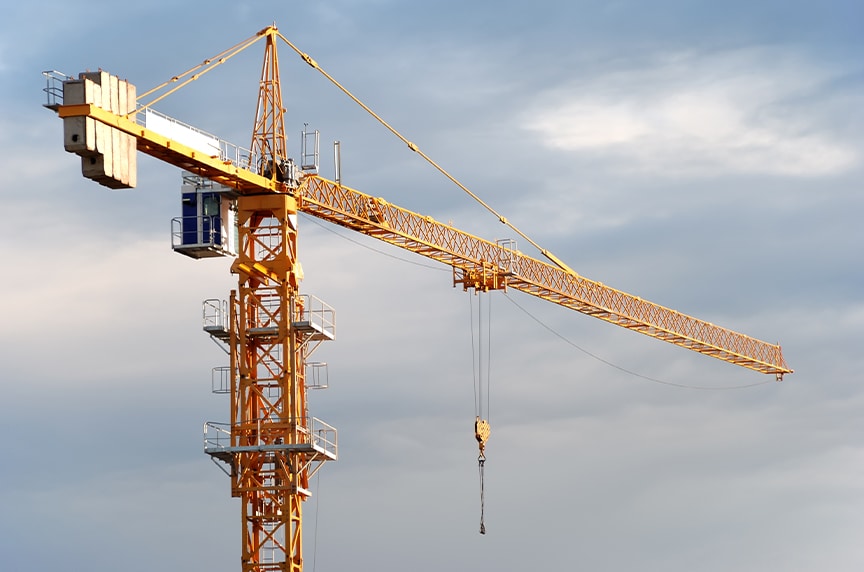
There are many types of construction cranes, each suited for different tasks. Tower cranes are common on high-rise buildings, while mobile cranes offer flexibility for various lifting needs. Crawler cranes provide stability on uneven ground, and heavy-duty cranes handle extremely large loads. Together, these cranes support a wide range of construction activities.
Supporting Large-Scale Development Projects
Large-scale development involves projects that cover large areas, require tall structures, or include heavy components. Construction cranes make these projects possible by providing the strength and reach needed to move materials efficiently.
For example, in high-rise construction, cranes lift steel beams and concrete panels to upper floors. In bridge construction, cranes place heavy girders and deck sections with accuracy. Industrial developments rely on cranes to install large equipment, tanks, and structural elements. In every case, construction cranes help builders work faster and more safely.
Improving Efficiency on Job Sites
Efficiency is critical in large development projects. Delays can increase costs and disrupt schedules. Construction cranes improve efficiency by reducing the time it takes to move materials from one place to another. Instead of relying on multiple machines or manual handling, cranes can lift and place heavy items in one smooth operation.
Modern construction cranes are designed for precise control. Operators can position materials exactly where needed, reducing the need for rework. This precision helps keep projects on schedule and supports better coordination between different construction teams.
Enhancing Safety in Construction
Safety is a major concern on large construction sites. Heavy materials, working at heights, and crowded job sites all increase risk. Construction cranes help reduce these risks by minimizing manual lifting and controlling how heavy loads move.
Professional crane operators follow strict safety procedures. Before lifts begin, detailed planning takes place to assess load weight, ground conditions, and lift paths. Well-maintained cranes and trained crews help prevent accidents and protect workers, nearby structures, and equipment.
By handling heavy lifting tasks, construction cranes reduce physical strain on workers and lower the chance of injuries related to manual handling.
Supporting Modern Building Techniques
Large-scale development increasingly uses modern building methods such as prefabrication and modular construction. In these approaches, large sections of buildings are manufactured off-site and then transported to the job site. Construction cranes play a key role in lifting and placing these large components.
Using cranes for prefabricated elements speeds up construction and improves quality control. Structures can be assembled faster, with fewer delays caused by weather or on-site conditions. This approach is especially valuable for large projects with strict deadlines.
Adapting to Different Project Needs
Every large development project has unique requirements. Construction cranes offer flexibility to meet these needs. Mobile cranes can be moved easily between sites, making them ideal for projects that require short-term lifting. Tower cranes provide height and reach for tall buildings. Crawler cranes handle heavy loads on challenging terrain.
This variety allows contractors to choose the right crane for each phase of development. As projects progress, different cranes may be used to support changing tasks. This adaptability helps keep work moving smoothly.
Reducing Labor and Operating Costs
While construction cranes are powerful machines, they also help control costs. By speeding up lifting tasks and reducing labor needs, cranes contribute to overall project efficiency. Fewer workers are required to move heavy materials, and tasks are completed faster.
Using construction cranes also reduces the risk of material damage. Controlled lifting and placement help prevent costly mistakes and delays. Over time, these savings can have a significant impact on large-scale development budgets.
The Role of Skilled Operators and Planning
Construction cranes are only as effective as the people who operate them. Skilled crane operators bring experience, judgment, and precision to each lift. They work closely with site managers and engineers to plan safe and efficient operations.
Lift planning is especially important in large-scale development. Factors such as wind, load balance, and site layout must be considered. Careful planning ensures that construction cranes are used to their full potential while maintaining safety standards.
Supporting Urban Growth and Infrastructure
Cities continue to grow, and infrastructure demands increase every year. Construction cranes support this growth by enabling large projects in urban environments. Whether building office towers, hospitals, transportation hubs, or residential complexes, cranes help make efficient use of limited space.
In dense areas, cranes allow materials to be lifted vertically rather than transported across crowded sites. This reduces congestion and improves site organization. As a result, construction cranes play a direct role in shaping modern cities.
Environmental and Sustainability Benefits
Construction cranes can also support more sustainable building practices. Efficient lifting reduces waste and energy use. Prefabrication supported by cranes often leads to better material efficiency and less on-site waste.
Newer crane models are designed to be more energy-efficient and quieter, which is important for large projects near residential areas. These improvements help reduce the environmental impact of large-scale development.
Conclusion
Construction cranes are essential to large-scale development. They provide the strength, reach, and precision needed to build modern structures safely and efficiently. From high-rise buildings to infrastructure and industrial projects, construction cranes support every stage of development.
By improving efficiency, enhancing safety, and supporting modern construction methods, construction cranes help contractors complete complex projects on time and within budget. As development continues to expand, construction cranes will remain a key force behind the growth and transformation of cities and communities.
Comments