




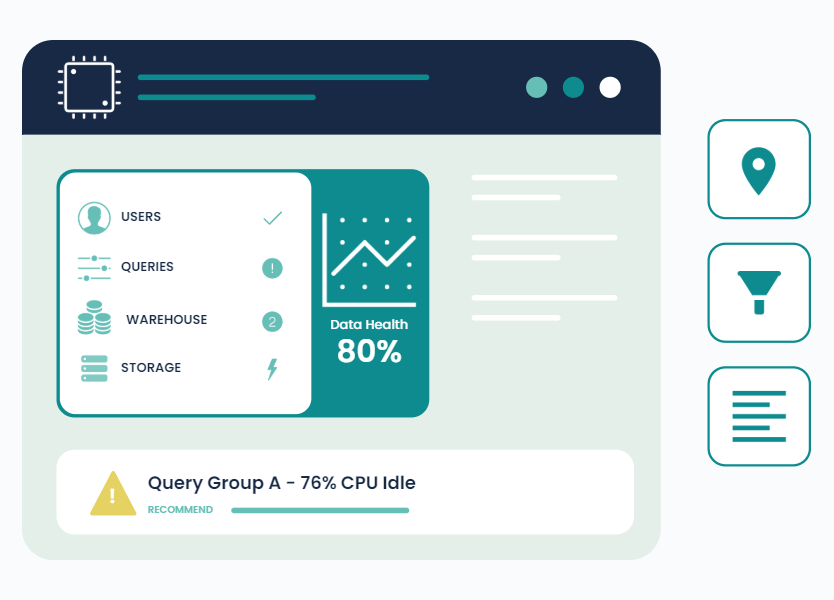
As organizations scale their data and AI initiatives, Databricks has become a cornerstone platform for data engineering, analytics, and machine learning. While Databricks enables powerful insights and rapid innovation, its usage-based cloud pricing model can also introduce cost unpredictability. This is where FinOps for Databricks plays a critical role.
FinOps brings financial accountability, transparency, and optimization to cloud data platforms, helping teams balance speed, performance, and cost. In this blog, we explore what FinOps means for Databricks, why it matters, and how organizations can implement it effectively.
What Is FinOps and Why It Matters for Databricks
FinOps (Financial Operations) is a cultural and operational framework that enables organizations to manage cloud costs collaboratively across engineering, finance, and business teams. It focuses on visibility, optimization, and accountability in pay-as-you-go cloud environments.
Databricks runs on cloud infrastructure (AWS, Azure, or GCP) and charges based on Databricks Units (DBUs) plus underlying compute and storage costs. Without proper controls, costs can grow rapidly due to:
- Always-on clusters
- Overprovisioned compute
- Inefficient workloads
- Lack of ownership and visibility
FinOps ensures Databricks remains cost-effective while still delivering high performance and scalability.
Understanding Databricks Cost Drivers
Before implementing FinOps, it’s important to understand what drives costs in Databricks.
Databricks Units (DBUs)
DBUs represent the processing capability consumed by workloads. Different workload types—such as jobs, interactive clusters, SQL warehouses, and ML workloads—consume DBUs at different rates.
Compute Infrastructure
Costs also depend on the underlying virtual machines selected (instance type, size, and availability), which vary by cloud provider.
Cluster Configuration
Key cost-impacting factors include:
- Number of nodes
- Instance size
- Auto-scaling settings
- Runtime versions
Workload Behavior
Long-running jobs, poorly optimized queries, idle clusters, and redundant pipelines can significantly increase spend.
Core Principles of FinOps for Databricks
1. Cost Visibility and Transparency
FinOps starts with making Databricks costs visible and understandable. Teams need answers to questions like:
- Which team or project is consuming the most DBUs?
- Which jobs or clusters are driving cost spikes?
- How much does a specific pipeline or dashboard cost to run?
Tagging clusters, jobs, and workspaces with metadata such as team, environment, or cost center is essential for meaningful reporting.

2. Ownership and Accountability
FinOps encourages shared responsibility. Engineers understand the cost impact of their design choices, while finance teams gain insight into technical drivers of spend.
Assigning cost ownership at the team or project level helps:
- Encourage efficient resource usage
- Reduce waste
- Align spending with business value
3. Cost Optimization Without Performance Trade-offs
FinOps is not about cutting costs blindly. It’s about spending efficiently. For Databricks, this means optimizing workloads while maintaining performance and reliability.
Key FinOps Strategies for Databricks
Right-Sizing Clusters
Overprovisioned clusters are one of the biggest sources of waste. FinOps practices help teams:
- Choose appropriate instance types
- Reduce node counts for lighter workloads
- Match cluster size to workload requirements
Regular reviews of cluster utilization metrics are critical.
Auto-Scaling and Auto-Termination
Databricks supports both auto-scaling and auto-termination, which are foundational FinOps controls.
Best practices include:
- Enabling auto-termination for interactive clusters
- Using job clusters instead of shared clusters for scheduled workloads
- Setting reasonable idle timeouts
These measures prevent paying for unused compute.
Workload Separation
Separating workloads by purpose—such as ETL, analytics, ad-hoc analysis, and machine learning—allows for tailored optimization strategies.
For example:
- ETL jobs can run on cost-efficient, ephemeral job clusters
- BI workloads can use SQL warehouses optimized for concurrency
- ML workloads can scale dynamically during training and shut down afterward
Optimizing Jobs and Queries
FinOps teams work closely with data engineers to improve efficiency by:
- Reducing unnecessary data scans
- Optimizing Spark configurations
- Using Delta Lake features like data skipping and caching
- Scheduling jobs during off-peak hours when possible
Small performance improvements can translate into significant cost savings at scale.
Monitoring, Reporting, and Forecasting
Cost Monitoring Dashboards
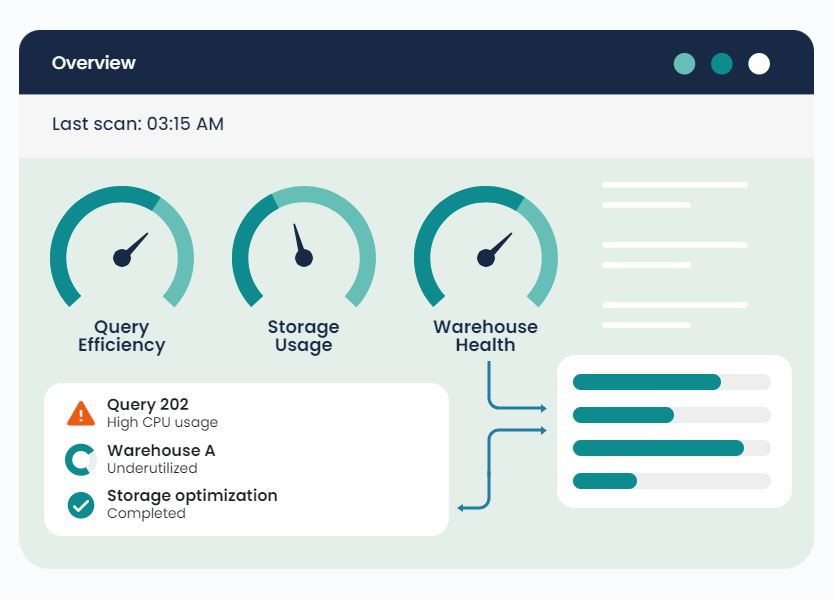
Effective FinOps relies on real-time and historical cost monitoring. Dashboards can show:
- DBU consumption trends
- Cost by workspace, team, or job
- Idle vs. active compute time
This data empowers teams to act before costs spiral.
Budgeting and Forecasting
FinOps enables more accurate forecasting by analyzing historical usage patterns and planned growth. Teams can:
- Set monthly or quarterly budgets
- Track actuals vs. forecasts
- Identify anomalies early
This predictability is essential for enterprise financial planning.
Automation and Governance in FinOps
Automation strengthens FinOps practices by enforcing policies consistently. Examples include:
- Automatically terminating idle clusters
- Enforcing tagging standards
- Alerting teams when cost thresholds are exceeded
- Blocking oversized clusters without approval
Governance ensures cost optimization becomes part of daily operations, not a reactive exercise.
The Future of FinOps for Databricks
As Databricks adoption grows, FinOps will evolve from reactive cost control to proactive optimization. Emerging trends include:
- AI-driven cost recommendations
- Predictive scaling based on workload patterns
- Deeper integration between Databricks, cloud providers, and FinOps platforms
These capabilities will help organizations maximize return on investment while accelerating data-driven innovation.
Conclusion
FinOps for Databricks is essential for organizations that want to scale analytics and AI responsibly. By combining cost visibility, shared accountability, intelligent optimization, and automation, teams can control spending without limiting performance or innovation.
When implemented correctly, FinOps transforms Databricks from a cost concern into a strategic advantage—enabling faster insights, better decisions, and sustainable growth.
Comments