




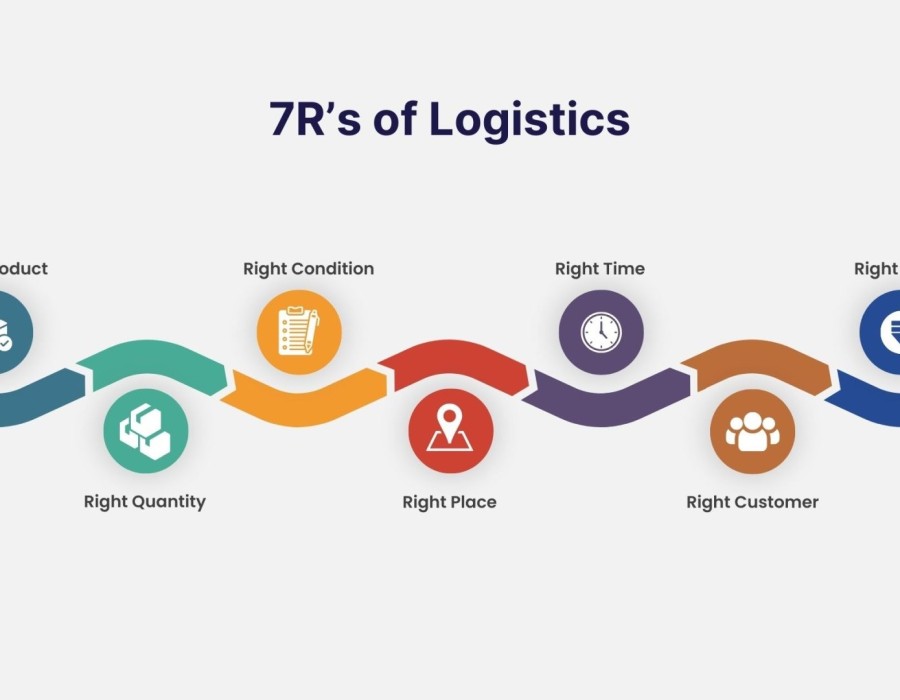
Efficient logistics is the backbone of every successful business, ensuring that products move smoothly from suppliers to customers. To achieve this, experts often follow the 7 Rules of Logistics, also known as the 7 Rs. These principles help logistics companies and supply chain professionals maintain accuracy, speed, and reliability in every operation.
Below is a simple breakdown of each rule and why it matters.
1. The Right Product
The first rule ensures that the correct product is picked, packed, and shipped. Mistakes lead to returns, complaints, and extra costs.
Logistics companies use inventory systems, barcode scanning, and quality checks to guarantee that the right item leaves the warehouse.
2. The Right Quantity
Every customer expects exactly what they ordered—no more, no less.
Accurate quantity management prevents overstocking, shortages, and unnecessary warehouse expenses.
3. The Right Condition
Products must be delivered safely and damage-free.
This rule focuses on proper packaging, temperature control, and secure transportation.
Good logistics companies invest in trained handlers, durable packaging, and safe loading methods to protect goods.
4. The Right Place
Deliveries must reach the accurate destination, whether it's a retail store, warehouse, or customer’s home.
Advanced routing software and GPS tracking help ensure shipments arrive exactly where they should.
5. The Right Time
On-time delivery is the heart of logistics.
Delays can disrupt business operations, reduce customer trust, and increase storage costs.
Modern logistics companies rely on route optimization, real-time monitoring, and predictive planning to maintain punctuality.
6. The Right Customer
This rule ensures that each shipment reaches the correct customer or business.
Accurate labeling, verification processes, and digital tracking systems help prevent mix-ups.
7. The Right Cost
Deliveries must be completed at an optimal cost without compromising quality.
The goal is cost-efficiency, not cheap service.
Logistics companies manage fuel usage, optimize routes, use bulk shipping, and reduce unnecessary handling to maintain the right cost balance.
Why the 7 Rules Matter
The 7 Rs of logistics are essential for businesses of all sizes.
They help achieve:
- Faster deliveries
- Fewer mistakes
- Lower operational costs
- Higher customer satisfaction
- Stronger supply chain efficiency
Companies that follow these principles can compete better in today’s fast-moving markets.
Conclusion
The 7 Rules of Logistics act as a framework for smooth and reliable supply chain operations. When logistics companies follow these guidelines—delivering the right product, in the right quantity, in the right condition, to the right place, at the right time, to the right customer, and at the right cost—they ensure success for themselves and their clients.
Comments