




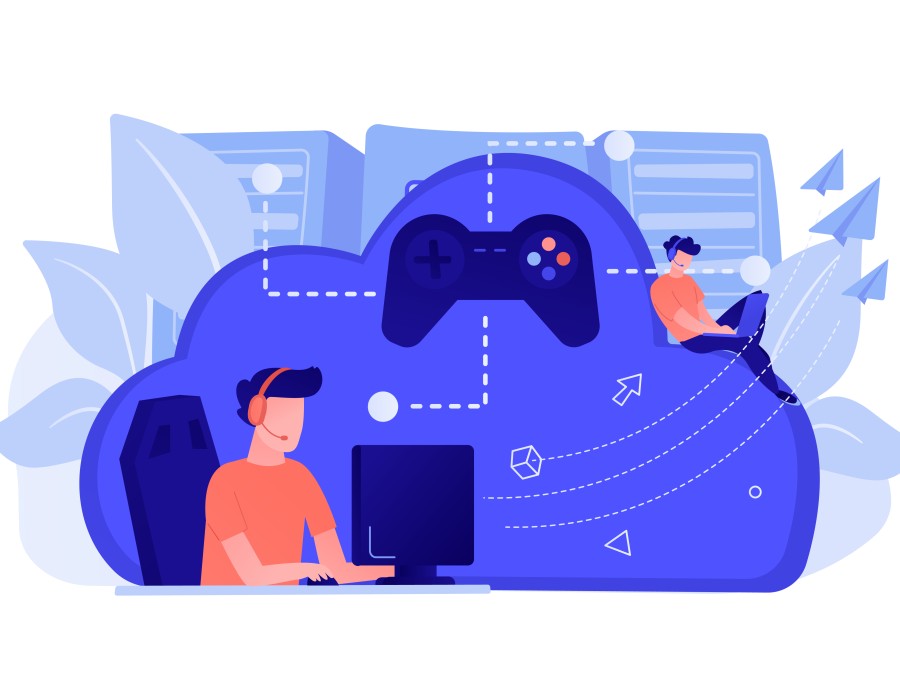
The landscape of multiplayer gaming has changed dramatically over the past decade. What began with local split-screen matches and dial-up connections has evolved into a global, interconnected ecosystem where millions of players compete, collaborate, and socialize in real time. Now, a new paradigm is emerging, one driven not by powerful home consoles or high-end PCs, but by the boundless potential of cloud technology.
As the gaming industry transitions toward a fully cloud-based world, multiplayer experiences will undergo their most profound transformation yet. From faster matchmaking and seamless cross-platform play to intelligent servers and AI-powered game worlds, cloud gaming promises to rewrite the rules of how people play together. This article explores what the future of multiplayer gaming could look like in a world where every game, every player, and every interaction is powered by the cloud.
1. The Cloud as the Ultimate Equalizer
One of the most appealing aspects of a cloud-based gaming ecosystem is its ability to level the playing field quite literally. Today, multiplayer gaming is heavily influenced by hardware disparities. A player on a top-tier gaming PC often has a performance edge over someone using an older console or a budget laptop. Cloud gaming eliminates that difference by shifting all computing tasks to powerful, remote servers.
Uniform Performance for All Players
In a fully cloud-based world, the device you use becomes almost irrelevant. Whether you play on a smartphone, a TV stick, a low-cost laptop, or a high-end PC, you access the same game, rendered at the same quality, at the same speed. The servers handle the heavy lifting, graphics rendering, physics simulations, and processing complex AI behaviors.
This means no more lagging in competitive shooters due to low frame rates, no more hardware upgrades just to play the latest titles, and far fewer cases of players being unfairly disadvantaged because of their setup.
Lower Barriers to Entry
Cloud-powered multiplayer games will likely ignite massive growth in the global player base. Gamers won’t need expensive hardware, huge storage space, or long download times. A stable internet connection becomes the most important requirement, opening the door for players in regions where gaming PCs or consoles are less accessible.
The future of multiplayer gaming is one where everyone, regardless of socioeconomic factors, can compete on equal footing.
2. Near-Zero Latency: The Holy Grail of Multiplayer
Latency has always been the Achilles’ heel of online gaming. Even the fastest gaming rigs are at the mercy of internet infrastructure, resulting in delays that can make or break multiplayer experiences. But with advancements in edge computing, 5G, and eventually 6G networks, ultra-low latency becomes achievable.
Edge Computing: Servers That Live Close to Home
Traditional cloud servers often live far from players, causing delays as data travels across long distances. Edge computing solves this by placing mini-data centers close to major population hubs. In a cloud-based multiplayer environment, this means:
- Packets reach servers in milliseconds
- Reaction-based games like shooters and battle royales become ultra-responsive
- Even large-scale simulations with thousands of players maintain smooth performance
A New Standard for Esports
Esports, which already attracts millions of viewers, will benefit enormously from near-zero latency gameplay. Standardizing latency at extremely low levels ensures fairness and precision at competitive levels. Professional players will no longer need specialized local servers or high-end hardware cloud servers will handle everything.
3. Massive, Persistent Worlds Powered by the Cloud
Fully cloud-based multiplayer games will unlock new forms of persistent, evolving game worlds that go far beyond what local hardware can handle today.
Worlds With Millions of Simultaneous Players
Current multiplayer environments are capped by server limits, typically a few dozen to a few hundred players per instance. Cloud technology could enable:
- Thousands or even millions of players in a single shared world
- Large-scale battles and dynamic events that unfold in real time
- Game universes that change constantly based on player actions
Imagine a global strategy game where millions of players build civilizations on the same planet, all influencing the world’s economy, resources, and political landscape. Or a fantasy RPG where every quest, battle, and discovery shapes a persistent, evolving universe, with new factions such as Erone emerging dynamically as the world grows and players shape its future.
Smarter, More Dynamic AI
Cloud infrastructure allows developers to integrate incredibly complex AI systems into multiplayer games:
- NPCs that learn and adapt to player behavior
- AI factions that manage resources, form alliances, or declare wars
- Intelligent matchmaking systems that analyze player patterns in real time
AI won’t just exist in the game; it will influence the entire multiplayer ecosystem, creating richer and more immersive experiences.
4. Cross-Platform Play Without Limitations
As gaming moves fully into the cloud, the idea of platform exclusivity becomes increasingly obsolete. Players can access the same multiplayer environment from virtually any device, regardless of manufacturer or operating system.
One Account, Infinite Access
A future cloud-based multiplayer system will likely allow users to:
- Start a game on their living room TV
- Continue it on their lunch break via smartphone
- Switch to a PC at night without missing progress
Your account travels with you, and so does your multiplayer experience. Cloud-based save states and continuous syncing make transitions instant and effortless.
Breaking Down Community Silos
Today’s gaming communities are fragmented across PlayStation, Xbox, PC, Nintendo, and mobile. Cloud gaming will merge these groups into one. Friends won’t need matching hardware to play together, just an internet connection.
This convergence expands player communities, strengthens matchmaking pools, and reduces wait times.
5. Enhanced Security and Anti-Cheat Measures
Cheating is one of the biggest challenges in online multiplayer gaming. Most cheats run on a player’s local machine, manipulating game data before it ever reaches the server. But in a fully cloud-based world, that vulnerability disappears.
Server-Side Authority
With all game logic processed in the cloud:
- Players cannot modify files or memory to cheat
- Aimbots, wallhacks, and speed-hacks become nearly impossible
- Developers gain real-time monitoring capabilities
Cheaters will have far fewer avenues to exploit, making multiplayer gaming fairer and enjoyable.
6. New Monetization Models for Developers
Cloud gaming changes not just gameplay but also business models.
Subscription-Based Multiplayer Libraries
Services like Xbox Cloud Gaming and NVIDIA GeForce Now show a clear trend: players are open to subscription access. In the future, multiplayer games might be part of large, cloud-based catalogs with:
- Unlimited access to dozens of multiplayer titles
- Cloud-hosted expansions and live events
- Seasonal passes delivered entirely via the cloud
On-Demand Worlds and Episodic Multiplayer Experiences
Developers may release smaller, frequently updated multiplayer story arcs similar to TV episodes rather than massive standalone games. Cloud platforms make this model efficient and scalable.
7. Social Gaming Becomes More Immersive and Inclusive
Multiplayer gaming has always been social, but the cloud will take it to new heights.
Virtual Social Spaces
Imagine lounge areas, lobbies, or entire virtual cities where players meet, chat, shop, and plan matches. Everything loads instantly via the cloud. Social spaces become as important as the games themselves, blending entertainment with digital community building.
Integration With Everyday Life
Cloud-based multiplayer will integrate easily with:
- Social media
- Smart TVs
- Voice assistants
- Wearables
- AR glasses
You might receive a message on your smartwatch inviting you to a match or join a team huddle through AR overlays during your commute.
8. Challenges on the Path Ahead
Despite its promise, fully cloud-based multiplayer gaming faces hurdles.
Connectivity and Infrastructure
High-speed internet and low latency are essential areas lacking strong broadband may struggle with cloud gaming’s demands.
Server Costs
Developers need a scalable cloud infrastructure, which can be expensive. However, competition among cloud providers will likely drive costs down over time.
Digital Ownership Concerns
Players may worry about losing access to games if services shut down. Companies will need to address concerns around ownership, backups, and offline access.
9. Final Thoughts: A Game-Changing Future
The future of multiplayer gaming in a fully cloud-based world is exciting, transformative, and full of opportunities. With instant access, global accessibility, smarter AI, massive persistent worlds, and more immersive social features, cloud-powered multiplayer experiences could redefine what it means to play together.
For writers, developers, and thought leaders eager to explore this evolving space, opportunities abound, including platforms that encourage contributions with themes like write for us technology. The gaming revolution is just beginning, and cloud technology will be at the heart of it.
The transition won’t be without challenges, but the rewards are immense: a connected, vibrant, innovative future where multiplayer gaming is more inclusive, dynamic, and immersive than ever before.
Comments