




.jpg)
Walking into an operating room or even a minor procedure clinic, you will see trays lined with shiny, metallic instruments. To the untrained eye, many of these tools look identical. Two of the most commonly confused instruments are forceps and hemostats. While they share a similar scissor-like appearance (in some cases) and are both essential for surgery, their functions are distinct. Understanding the difference between forceps vs hemostat is crucial for medical students, surgical techs, and anyone interested in the precision of medical care.
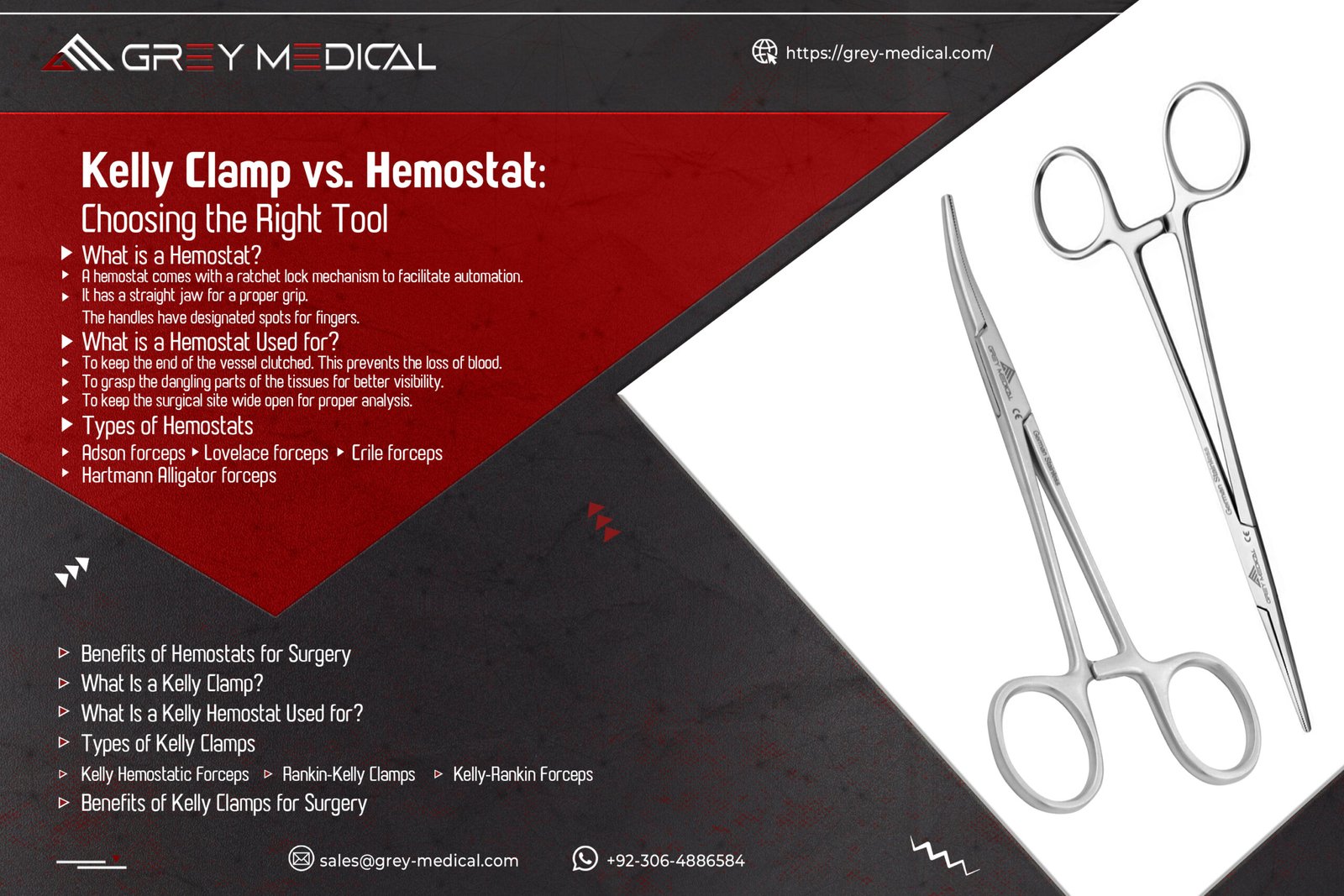
The Core Function of Forceps
Forceps are primarily grasping or holding instruments. Think of them as extensions of the surgeon's fingers. They allow for the delicate manipulation of tissues that are too small or slippery to handle by hand. There are two main categories: thumb forceps and locking forceps.
Thumb forceps look like tweezers. Surgeons use them to hold tissue while suturing or to move dressings. Locking forceps often have ring handles, similar to scissors, but their jaws are designed to grasp rather than cut. They might be used to hold a sponge or to grasp a specific piece of tissue firmly without crushing it excessively. When discussing forceps vs hemostat, remember that forceps are the "hands" that hold, lift, and position.
The Critical Role of Hemostats
A hemostat, short for hemostatic clamp, has a much more specific job description. Its name gives it away: "hemo" refers to blood, and "stat" implies stopping. Therefore, a hemostat is designed to stop bleeding.
Hemostats almost always have a locking mechanism called a ratchet located near the finger rings. This allows the surgeon to clamp a blood vessel and leave the instrument in place, effectively sealing the vessel until it can be tied off or cauterized. While they look like locking forceps, the jaws of a hemostat are specifically serrated to grip blood vessels securely without slipping. This functional difference is the key takeaway in the forceps vs hemostat comparison.
Key Differences in Design and Usage
Visually, distinguishing these tools takes practice. Hemostats usually have finer tips compared to the broader jaws of grasping forceps. The serrations on the jaws also differ; hemostats often have transverse serrations running the full length of the jaw to ensure a non-slip grip on veins or arteries.
Forceps, particularly tissue forceps, might have teeth at the tip to bite into tissue for a secure hold. When a surgeon asks for an instrument, knowing whether they need to stop a bleed or hold a flap of skin determines the choice in the forceps vs hemostat dilemma.
Quality Matters in Surgical Instrumentation
Whether a surgeon is reaching for a Kelly hemostat to clamp a vessel or Adson forceps to suture a wound, the quality of the steel matters. GreyMedical® is a privately owned medical technology company dedicated to innovation and excellence in the craft of surgical instruments. Their commitment ensures that when a surgeon locks a hemostat, it stays locked, and when they grasp with forceps, the alignment is precise.
Conclusion
The distinction between these instruments is fundamental to surgical success. Forceps are the versatile graspers, essential for manipulation and holding. Hemostats are the guardians against blood loss, designed to clamp and seal. Mastering the nuances of forceps vs hemostat ensures that the right tool is always in hand for the right task, ultimately leading to safer and more efficient patient care.
Comments