




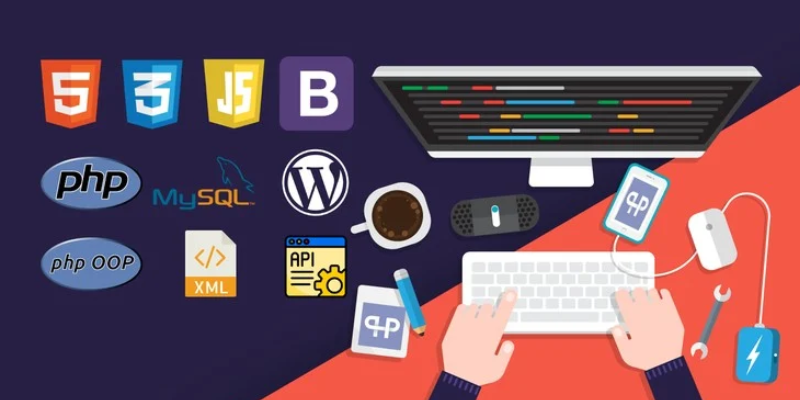
Starting a career in technology can be confusing for beginners because the IT industry offers many different paths. Full-stack development has been an emerging trend of choice since developers work on both front end apps and back-end apps. With this skill set, one can have a clear picture of how an entire product is developed, rather than focusing on a single layer. The first step many learners take in this direction is through organized programs like a Full Stack Developer Course Singapore , which teaches the basics of web technologies and development concepts. As the number of businesses going online increases, the demand for full-stack developers who can work on complete applications has grown, making full-stack development an attractive career.
Key Responsibilities of a Full Stack Developer
A full-stack developer is responsible for both the client and server sides of applications. This job involves creating web pages, building a database, managing servers, and integrating it all smoothly. Companies are appreciating developers who see the entire development process rather than outsourcing to various experts. Beginners can use this position to create a clear picture of how software functions, step by step. In the long run, this general knowledge facilitates problem-solving and builds confidence. Understanding the entire project stack also helps development professionals communicate more effectively with other team members in different technical fields.
High Demand Across Industries
Few industries do not require full-stack developers: finance, healthcare, education, retail, and entertainment. Any company with a website or an application requires individuals capable of building and maintaining it. Because they can manage multiple tasks simultaneously, full-stack developers are the employees of choice for small teams and startups. The demand is high, creating additional jobs and improving job security. For freshers, it would entail more opportunities to enter the industry. With increased experience, developers may advance to top jobs, technical leadership roles, or even niche roles.
Learning Path and Skill Development
A full-stack developer's learning process begins with simple programming concepts and progresses to more sophisticated frameworks and tools. A novice programmer typically starts with HTML, CSS, and JavaScript, and then studies back-end programming languages, databases, and version control systems. Other students consider international studies, and a Full Stack Developer Course in Dubai at FITA Academy can help learners understand global trends and where their skills will be in demand. This learning process is done step by step, building a solid technical foundation and promoting continuous improvement, both of which are fundamental in a fast-evolving tech career.
Career Flexibility and Growth Options
Career flexibility is one of the key benefits of full-stack development. Developers with experience have options for directions to take, depending on their interests. Others graduate into front-end or back-end specialization, or into software architecture, technical consulting, or project leadership. Freelancing and remote work are also supported by full-stack skills, enabling professionals to exercise greater control over their careers. This is flexible, allowing developers to adapt to industry changes and individual objectives. Technology is changing rapidly, and because of the breadth of their skills, full-stack developers can easily acquire new tools and remain relevant in the long term.
Strong Problem-Solving and Thinking Skills
Full-stack development enhances logical thinking and problem-solving skills. The developers are usually confronted with problems that involve design issues and technical constraints. Cross-stacking helps identify issues more quickly and find solutions. These abilities are functional during coding, planning, and decision-making. Over time, developers develop the idea of thinking like a user and also consider the system's performance and security. Such balanced thinking makes full-stack developers more valuable and trustworthy, and it is on this basis that most employers can do away with them and assign them significant tasks.
Global Opportunities and Long-Term Stability
Location is no longer a limitation in technology professions, and full-stack development provides international opportunities. Many companies recruit developers remotely in other countries. Professionals can work on global projects or move abroad in search of better opportunities, provided they have the necessary skills and experience. Long-term stability is also available in full-stack development, as digital transformation is a continuous process worldwide. As new technologies emerge, full-stack developers can improve their skills and continue to grow. This flexibility will ensure the career remains strong as the job market changes.
Building a Future-Proof Career
Full-stack development as a profession offers high growth, broad opportunities, and a successful career. It also provides an all-round perspective on software development, which helps professionals feel more assured and competent. This position is also appropriate for novice and experienced students due to the high demand, flexible career fields, and international opportunities. Full-stack developers can enjoy stable, fulfilling careers through continuous learning and practical experience. Full-stack development is a sustainable career option with long-term opportunities for those who enjoy solving problems, learning new technologies, and building entire applications.
Comments