




1. Introduction: Using AlphaAMT to Pioneer Aerospace-Grade 3D Printing
AlphaAMT offers innovative solutions designed especially for aerospace applications. Our high temperature 3D printer are designed to work with cutting-edge materials like ceramics, titanium, Inconel, and UHTCs, allowing aerospace makers to create intricate, high-performance parts with unmatched strength and accuracy. AlphaAMT's 3D printing solutions give aerospace firms the resources they need to achieve the industry's strict quality standards, cut costs, and speed up development cycles while they push the boundaries of innovation.

2. High-Temperature 3D Printing's Importance for Aerospace
High temperatures, mechanical stress, and corrosive environments are just a few of the harsh conditions under which aerospace components must function. Conventional manufacturing techniques frequently fail to produce parts that satisfy these exacting specifications. A revolutionary method is provided by high-temperature 3D printing, which enables the creation of intricate shapes using materials that can resist temperatures higher than 1500°C. This technology makes it possible to produce lightweight, high-strength parts that are essential for aircraft, spacecraft, and defense systems, such as engine components, thermal protection systems, and structural elements. The aerospace industry may greatly reduce development times and promote innovation by utilizing additive manufacturing to enable design flexibility, quick prototyping, and on-demand production.
3. The High-Temperature 3D Printer Technology of AlphaAMT
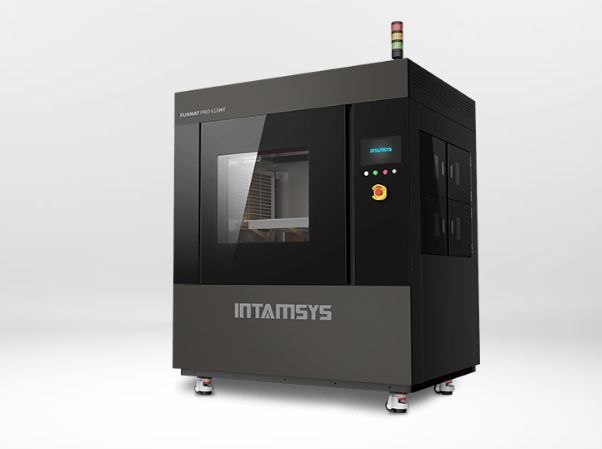
The high-temperature 3D printers from AlphaAMT are designed with accuracy, durability, and adaptability in mind. Our systems use sophisticated hot-end assemblies that can process a variety of high-performance materials at temperatures as high as 3000°C. Because of their modular design, the printers may be tailored to fit certain aerospace applications, whether they are for huge structural components or tiny prototype pieces. Our printers guarantee ideal conditions for material deposition, reducing flaws and guaranteeing consistent quality thanks to their advanced temperature control systems, inert gas environments, and real-time monitoring.
Important characteristics consist of:
- Capacity to reach temperatures as high as 3000°C
- Compatibility with aerospace-grade materials such as ceramics, Inconel, titanium alloys, and UHTCs
- Accurate multi-axis motion systems for complex shapes
- Routines for automated calibration and maintenance
- Process control and remote monitoring for increased dependability
Aerospace engineers and manufacturers are able to push the limits of additive manufacturing thanks to this cutting-edge technology.
4. Material Properties for Aerospace Uses
A wide range of cutting-edge materials designed for aerospace applications can be used with AlphaAMT's high-temperature 3D printers. Among them are:
- Superalloys based on nickel (Inconel 718, Inconel 625): Excellent fatigue life, corrosion resistance, and high-temperature strength make it ideal for exhaust systems, combustion chambers, and engine components.
- The high strength-to-weight: Ratio, corrosion resistance, and biocompatibility of titanium alloys (Ti-6Al-4V) make them perfect for airframes and structural parts.
- Ceramics and UHTCs (Ultra-High Temperature Ceramics): Used in heat shields, thermal protection systems, and re-entry vehicle parts, these materials can endure extremely high temperatures.
- Refractory metals: Used in high-temperature electrical and structural applications, such as tungsten and molybdenum.
With the help of our technology, which guarantees exact control over the processing settings, dense, flawless parts with qualities that either match or surpass those of conventionally manufactured components can be produced. The effectiveness, durability, and safety of aircraft components are directly impacted by the capacity to process these materials.
5. 3D Printing's Benefits for Aerospace Production
The aerospace sector can benefit greatly from implementing AlphaAMT's high-temperature 3D printing technology.
- Design Freedom: Construct intricate geometries, such as internal channels, lattice structures, and optimum aerodynamic shapes, that are not achievable with conventional manufacturing.
- Weight Reduction: Create lightweight parts that increase payload capacity and fuel efficiency.
- Rapid Prototyping: Create prototypes for testing and validation quickly to speed up development processes.
- On-Demand Production: Lower inventory costs by producing parts as needed, which makes maintenance and spare parts more accessible.
- Cost Savings: Include reduced machining and tooling costs, particularly for low-volume production runs.
- Improved Performance: Use cutting-edge materials to achieve greater structural integrity and high-temperature performance.
- Sustainability: Use less energy and produce less trash than subtractive manufacturing techniques.
- Innovation Enablement: Promote ongoing innovation in aerospace engineering by experimenting with novel designs, materials, and structures.
These advantages make AlphaAMT's 3D printing technology a valuable tool for aircraft companies looking to take the lead in this cutthroat market.
6. Practical Uses and Achievements
High-temperature 3D printers from AlphaAMT have been effectively incorporated into numerous aerospace projects across the globe. Notable uses consist of:
- Engine Components: Include the production of intricate turbine blades, combustion chambers, and nozzles that are lighter and have better thermal resistance.
- Thermal Protection Systems: UHTCs are used in the manufacture of heat shields and re-entry vehicle components to withstand high temperatures.
- Structural Parts: High-strength, lightweight structural components made for spaceship frameworks and airframes.
- Testing and Prototyping: Quick creation of prototypes for material validation, aerodynamic testing, and design revisions.
For example, a top aerospace manufacturer used AlphaAMT's technology to create a structural component made of titanium alloy with integrated cooling channels, which improved thermal performance and reduced weight by 15%. This success story demonstrates how the design and production of aerospace components may be transformed by high-temperature additive manufacturing.
7. Industry Compliance and Quality Assurance
Quality, safety, and compliance are non-negotiable in the aircraft industry. Advanced process monitoring, real-time quality checks, and stringent post-processing procedures are all incorporated into AlphaAMT's high-temperature 3D printers to guarantee that every component satisfies industry standards including AS9100, NADCAP, and ISO certifications.
Our systems are made to manufacture components with:
- Minimal porosity and high density
- Accurate dimensions within strict constraints
- Reliable mechanical characteristics
- Traceability via thorough process documentation
Additionally, our team works directly with clients to validate parts for essential aerospace applications, perform non-destructive testing, and create specialized quality assurance programs. Every component produced on AlphaAMT's platform complies with the highest requirements of performance, safety, and dependability because of this dedication to perfection.
8. Collaborating on Aerospace Innovation with AlphaAMT
Selecting AlphaAMT as your 3D printing for aerospace gives you access to state-of-the-art equipment, knowledgeable assistance, and a vision for aerospace innovation. From material selection, process development, and part design to post-processing and certification assistance, our team helps clients at every turn. We deliver specialized solutions that support your strategic objectives since we recognize the particular difficulties faced by aerospace manufacturers.

Because of our commitment to developing additive manufacturing technology, AlphaAMT is positioned as a reliable partner in influencing the direction of aerospace engineering. Our high-temperature 3D printers are made to satisfy your exacting needs, whether you're investigating novel materials, creating next-generation engines, or improving thermal protection systems.
Conclusion: Using AlphaAMT to Open Up New Aerospace Horizons
The highest levels of material performance, accuracy, and innovation are required in the aerospace sector. By enabling aerospace engineers and manufacturers to push beyond conventional boundaries, AlphaAMT's high-temperature 3D printing technologies open up new avenues for efficiency, performance, and design. We are the perfect partner for your aircraft production needs because of our cutting-edge technology, wide range of material compatibility, and steadfast dedication to quality. For more visit us!
Comments