


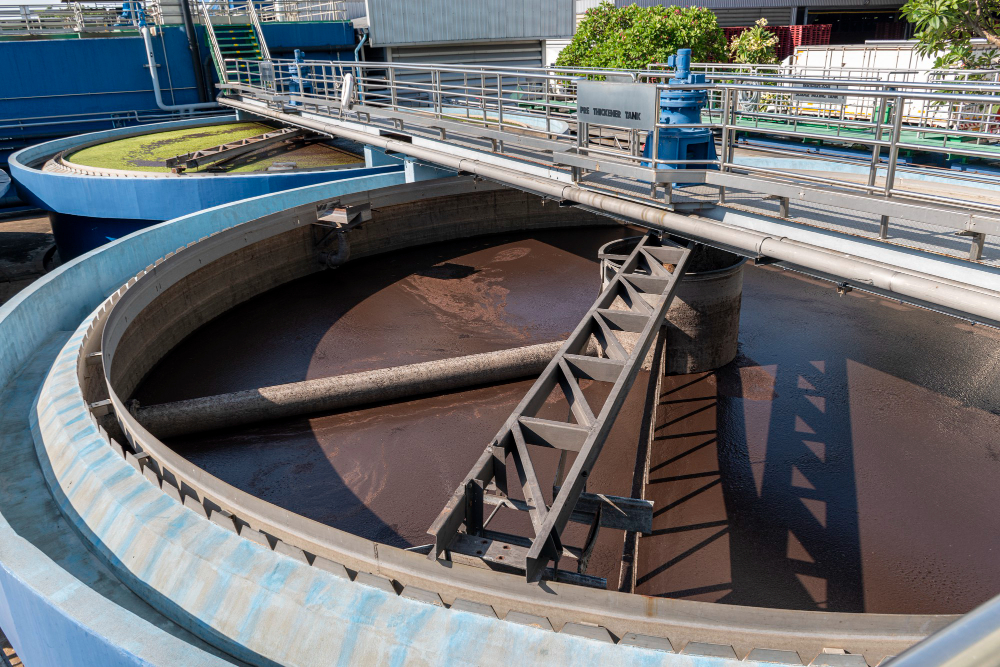
Every day, Indian cities collectively generate more than 72,000 million litres of sewage. Shockingly, less than 40% of it gets treated. The rest flows untreated into rivers, lakes, and groundwater, creating serious health and environmental risks. This is exactly where a professionally designed and executed Sewage Treatment Plant, delivered by a reputed sewage treatment plant installation company, becomes non-negotiable for housing societies, industries, hospitals, malls, and townships.
Today’s advanced STPs not only clean wastewater to the highest standards but also recover biogas, generate electricity, and enable water reuse – perfectly aligning with the principles followed by progressive renewable energy solutions company practices.
This 2000-word beginner-friendly guide explains, stage by stage, exactly how sewage treatment plants work so that you can choose the right system confidently.
What Is a Sewage Treatment Plant (STP) and Why Is It Needed in India?
A Sewage Treatment Plant (STP) is an engineered facility where domestic and industrial wastewater is systematically cleaned through physical, biological, and chemical, and sometimes advanced filtration processes before it is safely discharged or reused. When planned, designed, and commissioned by an experienced sewage treatment plant installation company that strictly follows CPCB and NGT guidelines, an STP ensures zero harm to the environment while recovering valuable resources like water and energy.
In India, the need has never been more urgent. According to the Central Pollution Control Board’s 2024 report, urban India generates approximately 72,368 MLD of sewage, yet the installed treatment capacity stands at only 26,870 MLD, leaving a massive gap of over 63%. States like Uttar Pradesh, Bihar, and West Bengal show treatment rates below 20%. Consequently, rivers such as the Yamuna, Ganga, and Cauvery continue to carry dangerous levels of pathogens and organic pollutants. Installing a reliable STP is therefore not just a regulatory requirement – it is a social and ecological responsibility.
Main Stages of Sewage Treatment – Detailed Step-by-Step Process
1. Preliminary Treatment – First Line of Defence
The moment raw sewage enters the plant, large debris that can damage pumps and pipelines must be removed immediately.
Key units in preliminary treatment:
- Bar screens (coarse & fine) – remove plastics, rags, sanitary items
- Grit chambers – settle sand, gravel, and eggshells
- Flow equalization tanks – balance peak morning and evening flows
- De-gritting and de-oiling units (in industrial STPs)
This stage alone removes 20–30% of total suspended solids and protects all downstream equipment.
2. Primary Treatment – Gravity-Based Separation
Primary treatment is purely physical and requires no electricity except for sludge scraping mechanisms.
Wastewater is retained in large primary settling tanks (also called primary clarifiers) for 2–4 hours. Heavier organic and inorganic solids settle down as raw sludge, while grease, oil, and light plastics float and are skimmed off.
Typical Primary Treatment Efficiency (Indian Context)
Parameter Raw SewageAfter Primary Treatment Removal EfficiencyBOD₅250–350 mg/L150–220 mg/L25–40%Total Suspended Solids300–500 mg/L100–180 mg/L50–70%Oil & Grease50–150 mg/L15–40 mg/L60–85%
3. Secondary Treatment – The Biological Heart of STP
This is where the actual “treatment” happens. Billions of naturally occurring bacteria and microorganisms are cultivated to eat dissolved and colloidal organic matter, converting it into carbon dioxide, water, and new bacterial cells.
4. Tertiary Treatment – Polishing for Reuse
When treated water is intended for gardening, toilet flushing, cooling towers, or even indirect potable reuse, tertiary treatment becomes essential.
Common tertiary processes include:
- Dual media/pressure sand filters
- Activated carbon filters (for odour and colour removal)
- Ultrafiltration membranes
- UV disinfection or ozonation
- Chlorination/de-chlorination
- Advanced nutrient (nitrogen & phosphorus) removal
5. Sludge Treatment & Resource Recovery
Sludge from primary and secondary stages contains 97–99% water and pathogens. It cannot be disposed of directly.
Modern sludge management includes:
- Gravity thickening
- Anaerobic digestion (produces 60–65% methane biogas)
- Mechanical dewatering (centrifuge, belt press, screw press)
- Solar drying or thermal drying
- Conversion to manure cakes or co-incineration in cement plants
In 2024–25, over 180 STPs in Maharashtra and Gujarat alone have achieved complete biogas utilization, generating 3–8 kW of power per 100 KLD capacity.
Real-Life Examples from India
- Delhi Jal Board’s 564 MLD Coronation Pillar STP (MBBR + Tertiary) supplies treated water to Rashtrapati Bhavan gardens and Delhi Golf Club.
- Pune’s 200 MLD Naidu STP runs partially on biogas and solar power.
- Bengaluru’s 60 MLD MBR plant at Prestige Shantiniketan supplies 100% treated water for flushing and landscaping, saving 22 million litres of fresh water daily.
Conclusion
Sewage treatment plants work through a scientifically sequenced combination of preliminary screening, primary settling, secondary biological degradation, tertiary polishing, and smart sludge management. When designed, installed, and operated by a trusted sewage treatment plant installation company that also integrates renewable energy solutions company features such as solar aeration, biogas engines, and water recycling loops, an STP becomes a profitable, sustainable asset rather than a mere compliance burden.
Whether you are constructing a new residential society, commercial complex, hospital, or industrial facility, choosing the right technology and partner today will save water, energy, and penalties tomorrow.
Ready to implement a zero-discharge, energy-positive sewage treatment system? Connect with an experienced team that delivers proven performance across India.
Frequently Asked Questions
- How long does the entire sewage treatment process take? From inlet to final outlet, it typically takes 12–36 hours depending on technology and plant size.
- Can we directly drink water treated by a normal STP? No. Standard tertiary-treated STP water is safe for non-potable reuse only. Drinking requires additional reverse osmosis, remineralization, and advanced oxidation.
- What is STP installation mandatory for new buildings in India? Yes. As per NGT Order 2019 and state PCB rules, all plots >20,000 sq.m or generating >50 KLD sewage must install and commission an on-site STP.
- How much space does a modern STP require? MBBR needs 0.15–0.25 m²/KLD, SBR needs 0.3–0.5 m²/KLD, while MBR needs only 0.08–0.12 m²/KLD – almost 70% less than old conventional plants.
- Can an STP run without electricity? Not completely, but plants with biogas recovery + solar-powered blowers can reduce grid dependency by 50–70% and achieve near net-zero operation.
Comments