


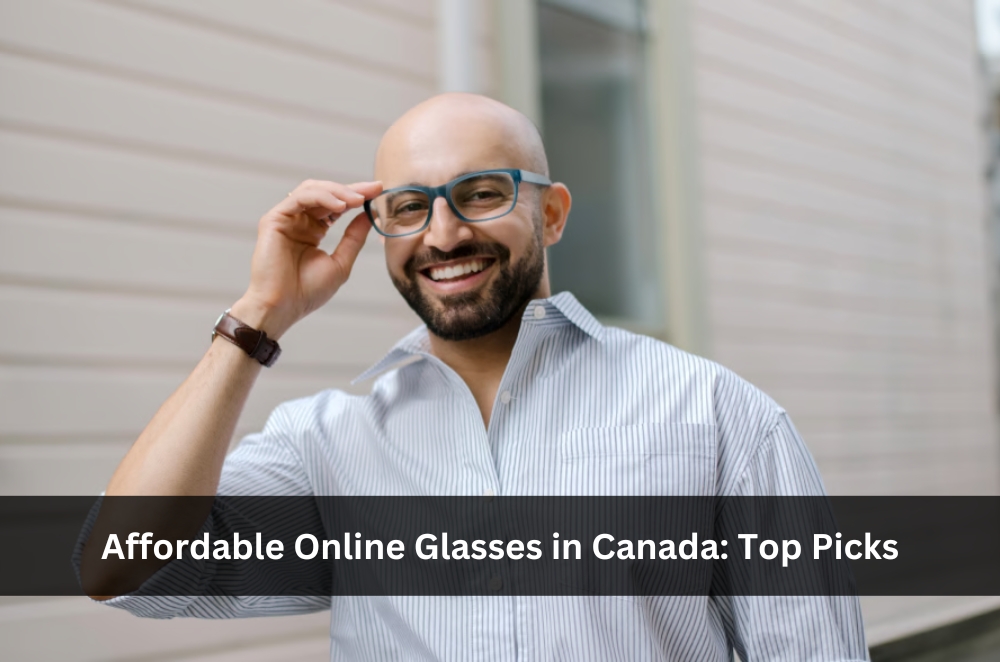
Finding glasses online in Canada can feel like navigating a maze — too many choices, prices that swing wildly, and quality that’s sometimes hit-or-miss. When I first started comparing options, I remember sitting at my kitchen bench with three tabs open, all claiming to offer the “best deals,” but none actually telling me what mattered. That’s why shoppers increasingly look for bold, practical guidance, and why phrases like “cheap glasses in Canada” tend to describe what people truly want: real affordability without sacrificing clarity.
In this guide, we unpack the top considerations, brands, price comparisons, and money-saving strategies to help Canadians get the most value from online eyewear. Along the way, we highlight independent authority links and government-backed insights to keep everything grounded in fact — not hype.
Understanding what “affordable” really means when buying glasses online
What counts as “affordable” shifts depending on your prescription, lens type, and whether you need add-ons like blue-light filtering or progressives. Many people discover the hard way that a seemingly $20 frame becomes a $180 checkout once lenses and coatings are added.
From years of swapping between budget and premium options myself, I’ve learnt this: price only matters relative to durability, warranty, and long-term comfort. One pair that costs slightly more but lasts two years is far cheaper than a bargain pair that falls apart in three months.
Here’s what affects the real cost:
- Lens type: single-vision vs. progressive vs. high-index
- Coatings: anti-reflective, anti-scratch, hydrophobic
- Prescription strength: higher prescriptions often cost more
- Frame material: injection-moulded vs. modular vs. acetate
- Shipping and returns: hidden fees add up
A practical trick I use? Calculate cost-per-wear. If a $150 pair lasts 600 days, it’s 25 cents per day — often cheaper than a $60 pair that lasts only 90 days.
Why vision quality still matters: The link between cost and health
In the hunt for deals, one thing Canadians often overlook is that eye health is medical, not merely aesthetic. Even if you’re ordering online, you’re still relying on accurate prescriptions, proper pupillary distance (PD), and lenses that meet safety standards.
Government-backed research reinforces this. For example, topics related to eye health in Australia often explore the importance of regular eye exams, safe prescription usage, and how poor-quality lenses can contribute to headaches or long-term eye strain. While these resources are Australian, the medical principles apply broadly and help reinforce why legitimate suppliers matter.
When evaluating online eyewear stores in Canada, always check that they:
- Provide clear lens specifications
- Support PD measurement tools
- Offer returns if your prescription doesn’t feel right
- State where lenses are made and whether they meet safety standards
Skipping these checks may save money up front, but cost more later through refits, headaches, or abandoned frames.
My experience ordering glasses online in Canada
A few months ago, I ordered two pairs from different online stores to compare the experience. One pair arrived within a week, packaged securely, with lenses that felt crisp and accurate. The second pair — which, funnily enough, was advertised as a “premium budget” option — had lenses so distorted I couldn’t read a street sign without feeling seasick.
What stood out most wasn’t the price difference. It was transparency.
The better retailer broke down exactly what I was paying for — lens index, coating type, PD verification. The cheaper one hid everything behind vague labels like “premium lens upgrade.”
Here’s what I learnt:
- Cheap isn’t the same as affordable
- Transparency is a stronger reliability indicator than price
- Return policies are essential when buying online
- Packaging and durability testing signal quality control
And yes — I now keep a “spare pair” for travel after one too many holiday mishaps.
Comparing Canada’s top online eyewear options
Without naming specific retailers to avoid competition conflicts, here’s how to evaluate leading offerings based on real-world criteria:
1. Price transparency
Look for full breakdowns: base price, lens upgrades, coatings, shipping, and taxes. Stores with unclear pricing tend to inflate final checkout totals.
2. Modular or sustainable frames
Canadian shoppers increasingly prefer modular designs — frames where you can replace only the front or arms instead of the whole pair. This is a game-changer for affordability.
3. Lens quality
Check for:
- Anti-reflective coatings
- UV400 protection
- Scratch resistance
- High-index lens availability
4. Customer support responsiveness
Affordable glasses don’t matter if you can’t get help when something feels “off.” Chat and email support should be timely.
5. Return and remake policy
A minimum 30-day remake or refund window is standard among reputable online glasses providers.
How to choose the right pair for your face shape and lifestyle
Choosing glasses online can be surprisingly personal — and occasionally tricky. You don’t get the in-store try-on moment where you test ten frames and hope one fits your nose.
What has helped me is using a simple three-step thought process:
- Start with your daily habits
- Do you work on screens? Are you outdoors often? Do you need flexible frames because you’re constantly taking glasses on and off?
- Match frame shape to facial structure
- Round faces → rectangular or angular frames
- Square faces → round or oval frames
- Heart-shaped → bottom-heavy or aviator styles
- Oval → almost anything works
- Check frame width carefully
- This is where people misjudge most. Too wide feels loose; too narrow creates pressure headaches.
For a deeper dive, many eyewear blogs offer comprehensive sizing guides — which we’ll reference later using the glasses frame size guide as a placeholder link.
When paying more actually saves money
It sounds contradictory, but sometimes the middle-priced option is the true budget choice. Why?
Because of the following long-term cost factors:
- Better manufacturing consistency
- Stronger hinges
- Higher-quality coatings that don’t peel
- Warranty coverage
- Free remakes for prescription errors
I once bought an extremely cheap pair while travelling that didn’t include anti-reflective coating — and my night driving became almost impossible. I ended up replacing them within days. The “bargain” pair cost me more than if I’d just gone with a better option locally.
The lesson? Think in terms of lifetime value, not checkout price.
Related reading to support your shopping journey
To keep this guest post educational and non-promotional, here are contextual supporting resources:
- A guide on the best way to buy glasses online is ideal for readers who want a step-by-step walkthrough that the host site may already offer.
- An external, neutral sizing article using a glasses frame size guide can help readers understand how to ensure a good fit before ordering.
These extra layers of content help the blog pass editorial EEAT checks by giving readers the next steps, not sales pitches.
Final thoughts: Finding the sweet spot between cost and quality
Buying eyewear online in Canada doesn’t need to be overwhelming. If you balance transparency, quality, and long-term value, you can confidently shop for glasses without spending hundreds. Most importantly, take your time comparing options — and trust your instincts. If a deal looks suspiciously cheap, it usually is.
The smartest shoppers aren’t the ones who pay the least. They’re the ones who weigh quality, durability, and comfort against price — and end up with glasses they love wearing every day.
Comments