


When you’re diagnosed with kidney stones or gallstones, the prospect of dealing with them can feel overwhelming. For many patients, treatment options range from medication to surgical interventions, with one particularly effective and non-invasive method standing out: Shock Wave Lithotripsy (SWL). This procedure has become the go-to option for breaking down stones that are too large to pass naturally but not large enough to require invasive surgery. But how does it work? What should you expect before, during, and after the procedure? Here’s everything you need to know about Shock Wave Lithotripsy, from diagnosis to recovery.
What is Shock Wave Lithotripsy (SWL)?
Shock Wave Lithotripsy is a non-invasive procedure used primarily to treat kidney stones, although it can be applied to stones in the bladder or gallbladder. The technique involves using high-energy shock waves to break down larger stones into smaller fragments, which can then pass more easily through the urinary tract or be excreted.
The procedure is considered a highly effective treatment for stones that range in size from 5 mm to 2 cm. Larger stones, or those located in more difficult-to-reach areas, may require alternative treatments, such as ureteroscopy or percutaneous nephrolithotomy.
When is SWL Used?
Shock Wave Lithotripsy is typically recommended when:
- The kidney stones are too large to pass naturally: Stones larger than 5mm often have trouble making their way through the urinary tract.
- Conservative treatment isn’t effective: Sometimes, medication and drinking plenty of fluids may not break down or expel the stone.
- The stone is causing pain or blocking urine flow: If a stone obstructs the urinary tract, it can cause severe pain and lead to urinary infections or kidney damage.
Your doctor will recommend SWL after assessing the size, type, and location of the stones. A CT scan or ultrasound is often used to determine the exact size and location of the stones before deciding on the best treatment.
How Does Shock Wave Lithotripsy Work?
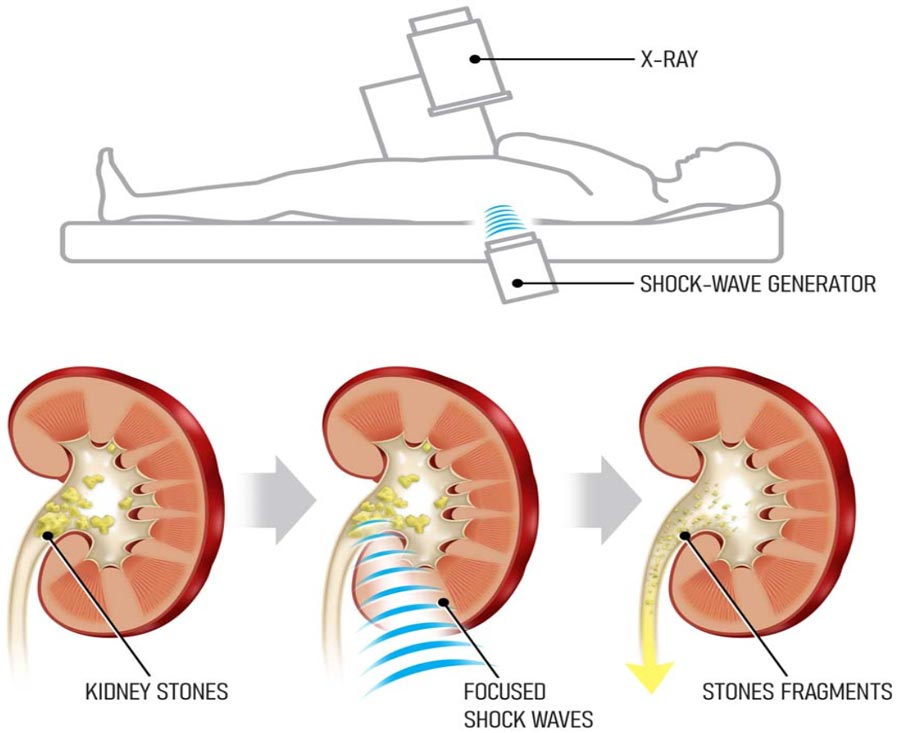
The concept behind SWL is relatively simple: high-frequency shock waves are directed toward the stone from outside the body, usually through the skin. These waves pass through the tissue and hit the stone, creating a strong impact that breaks the stone into smaller fragments. These smaller pieces can then pass through the urinary tract and be excreted in urine.
Here’s a step-by-step breakdown of the process:
- Positioning: You’ll be asked to lie down on a special treatment table. An ultrasound or X-ray is used to locate the stone accurately.
- Sedation: While SWL is non-invasive, it can be uncomfortable. A local anesthetic or light sedation is often administered to help you relax.
- Shock Wave Delivery: Once in position, the shock waves are directed toward the stone. The treatment usually lasts between 30 and 60 minutes, depending on the stone's size and location.
- Post-Treatment Observation: After the procedure, you’ll be monitored for a short period before being allowed to go home, as the anesthesia wears off.
For patients seeking affordable Shock Wave Lithotripsy treatment in Bangalore, Shree Srinivasa Uro Care offers high-quality, non-invasive treatments designed to break down kidney stones effectively. Their expert team ensures that patients receive the care and attention they need to recover swiftly.
What to Expect Before the Procedure
Before undergoing Shock Wave Lithotripsy, you’ll meet with your doctor to discuss your medical history, any allergies, and whether you’re taking any medications that might interfere with the procedure.
It’s important to follow any pre-procedure instructions provided by your healthcare team, including:
- Fasting: You may be asked to avoid eating or drinking for a few hours before the procedure.
- Medication Adjustments: Some blood thinners or anti-inflammatory drugs may need to be temporarily stopped before the procedure to minimize bleeding risks.
You’ll also be given specific instructions on how to prepare for the anesthesia, and it’s a good idea to arrange for someone to drive you home afterward, as you may still feel groggy from the sedative.
What to Expect During the Procedure
During the SWL treatment, you will be positioned on a treatment table while the doctor uses imaging (such as ultrasound) to locate the stone accurately. A gel is applied to the skin over the area where the shock waves will be focused, ensuring the waves pass through with minimal interference.
You may feel some discomfort or pressure from the shock waves, but the procedure is generally not painful due to the anesthesia or sedatives. The entire process usually takes less than an hour, though the exact duration can vary depending on the size and number of stones.
What Happens After the Procedure?
After the treatment, the majority of patients can go home the same day. However, there are some side effects and post-treatment care you should be aware of:
- Pain: You may experience mild to moderate pain as the stone fragments pass through the urinary tract. This is common and can be managed with pain medications prescribed by your doctor.
- Blood in Urine: It’s not unusual to notice a small amount of blood in your urine after the procedure. This usually resolves within a few days.
- Frequent Urination: The stone fragments will need to pass through your urinary system, which can lead to frequent urination and a feeling of urgency.
- Dietary Adjustments: You may be advised to drink plenty of fluids to help flush out the stone fragments and prevent new stone formation.
In most cases, you’ll have a follow-up appointment a few weeks after SWL to ensure that all fragments have passed and that no further complications are present. Your doctor may recommend a follow-up X-ray or ultrasound to check for any remaining pieces.
Risks and Complications of Shock Wave Lithotripsy
While Shock Wave Lithotripsy is generally safe, like any medical procedure, there are some potential risks, including:
- Infection: Any procedure involving the urinary tract carries a small risk of infection.
- Bleeding: Though rare, SWL can cause internal bleeding, especially if the stone is large or the location is difficult.
- Injury to surrounding tissues: In some cases, the shock waves may cause injury to nearby tissues, such as the kidneys or bladder.
- Incomplete Fragmentation: Sometimes, the stones may not break up sufficiently, necessitating a second round of treatment or a different intervention.
Recovery and Long-Term Outlook
For most patients, recovery after Shock Wave Lithotripsy is relatively quick. Most people can resume their normal activities within a few days to a week. The key to successful recovery is to stay hydrated and follow any additional instructions given by your healthcare team.
While Shock Wave Lithotripsy is highly effective, there is still a chance that new kidney stones may form in the future. Your doctor will likely provide advice on dietary changes or medications to help prevent recurrence.
Conclusion
Shock Wave Lithotripsy is a safe, effective, and minimally invasive way to treat kidney stones and other types of stones in the urinary system. While the procedure itself is relatively quick and low-risk, it’s important to understand what to expect in terms of preparation, treatment, and recovery. If you or someone you know is suffering from kidney stones, Shock Wave Lithotripsy may be the solution that offers fast relief without the need for invasive surgery. Be sure to speak with your healthcare provider to determine the best course of treatment based on your individual condition.
Comments