


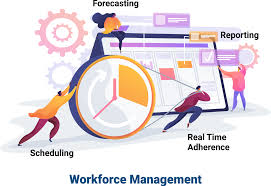
Efficient workforce capacity management has become a key factor in driving business success in 2025. As organizations become more dynamic and hybrid work models expand, traditional planning methods are no longer sufficient. Companies are turning to technology to understand workforce utilization, forecast demand accurately, and build agile teams that are ready to adapt in real-time.
With data-driven tools and AI-based analytics reshaping decision-making, businesses can now manage their people with precision and foresight rather than relying on assumptions.
Understanding Modern Workforce Capacity Management
To appreciate the technological impact, it’s essential to understand what workforce capacity management involves. It involves aligning employee availability, skills, and productivity with business demand. The goal is simple: ensure the correct number of people, with the right skills, are available at the right time. In earlier years, many organizations used spreadsheets and manual reports to plan staffing levels. However, these outdated methods provided limited visibility, often resulting in underutilization or burnout. In 2025, real-time visibility and predictive modeling have replaced guesswork, helping leaders make faster and more accurate decisions.
The Key Technologies Driving Change
Advancements in digital technology are transforming how teams are managed and optimized. Each innovation adds measurable value by improving accuracy, speed, and collaboration.
1. Artificial Intelligence and Predictive Analytics
AI has become an integral part of workforce capacity management. Through predictive analytics, businesses can forecast demand, identify skill gaps, and allocate resources efficiently. For instance, algorithms analyze past performance data to predict future workload trends, helping teams plan. This proactive approach ensures that workforce plans are flexible and can adjust to market changes or seasonal fluctuations.
2. Automation and Digital Dashboards
Automation reduces repetitive manual tasks, such as timesheet entry, attendance tracking, and reporting. Dashboards consolidate performance data, enabling managers to visualize workloads and employee utilization in real time. This level of transparency improves accountability and helps businesses maintain a balance between efficiency and employee well-being.
3. Cloud-Based Collaboration Tools
Hybrid work has made cloud platforms essential. These systems allow distributed teams to collaborate seamlessly and access the same capacity data. Managers can make informed decisions instantly, whether they’re in an office, on-site, or working remotely.
4. Internet of Things (IoT) and Real-Time Data
IoT sensors and devices track workspace usage, employee attendance, and operational activity. This real-time data enables smarter resource allocation and reduces downtime. Combined with AI, IoT enhances decision accuracy by feeding up-to-date information into planning systems.
Benefits of Technology-Enabled Capacity Management
The integration of technology into capacity planning has transformed how organizations operate daily.
- Improved forecasting accuracy: AI tools detect emerging trends, enabling leaders to plan confidently for future workloads.
- Higher productivity: Automation reduces administrative overheads, allowing teams to focus on critical tasks.
- Employee satisfaction: Balanced workloads and flexible scheduling promote better morale and retention.
- Operational agility: Data-driven insights enable companies to respond quickly to sudden changes in demand.
- Cost efficiency: Optimizing staff deployment minimizes overstaffing and reduces idle capacity.
By combining technology with strategic planning, businesses achieve a balance between performance and people management.
Challenges to Address
Despite its benefits, adopting technology for workforce capacity management comes with challenges. Integrating multiple systems and ensuring data accuracy can be complex. Many companies still operate in silos, preventing seamless data flow between departments. There’s also a need for change management. Employees must be trained to interpret analytics and trust data-driven recommendations.
Moreover, organizations must prioritize data privacy and cybersecurity as sensitive workforce information is stored digitally. A thoughtful adoption strategy that includes user training and phased implementation can significantly reduce these risks.
Best Practices for Businesses in 2025
To make the most of technology-driven capacity management, organizations should:
- Invest in unified data systems: Centralize all workforce information for accuracy and consistency.
- Encourage analytics literacy: Train managers and HR teams to interpret data insights effectively.
- Adopt flexible models: Combine automation with human judgment to avoid overreliance on algorithms.
- Monitor continuously: Regularly evaluate capacity models to ensure they remain relevant to business goals.
- Start small, then scale: Pilot technology in one department before implementing across the organization.
These practices help build a culture of informed decision-making, leading to sustained operational excellence.
The Future of Workforce Capacity Management
By 2025 and beyond, technology will continue to redefine workforce strategies. Artificial intelligence will evolve from predictive to prescriptive analytics, offering actionable recommendations, not just forecasts. Machine learning models will refine themselves, learning from every new data point. The future lies in real-time adaptability, where systems can auto-adjust schedules or reassign resources instantly.
As digital ecosystems mature, organizations will integrate capacity planning into broader business intelligence frameworks, creating a continuous feedback loop between strategy, performance, and workforce health.
Conclusion
Technology has transformed workforce capacity management from a reactive process into a proactive discipline. Businesses no longer rely solely on intuition; instead, they make informed decisions backed by data, analytics, and automation. This shift empowers organizations to optimize operations, boost employee satisfaction, and respond swiftly to market shifts.
As 2025 unfolds, those who integrate technology thoughtfully will lead with resilience and efficiency, ensuring that both people and processes perform at their full potential.
Comments